







- Cost per lead is only as honest as what you divide by. A report built on conversion events can count the same customer more than once.
- Repeat contacts, like a second call or a message after a call, make the reported cost look lower than the cost of reaching a new customer.
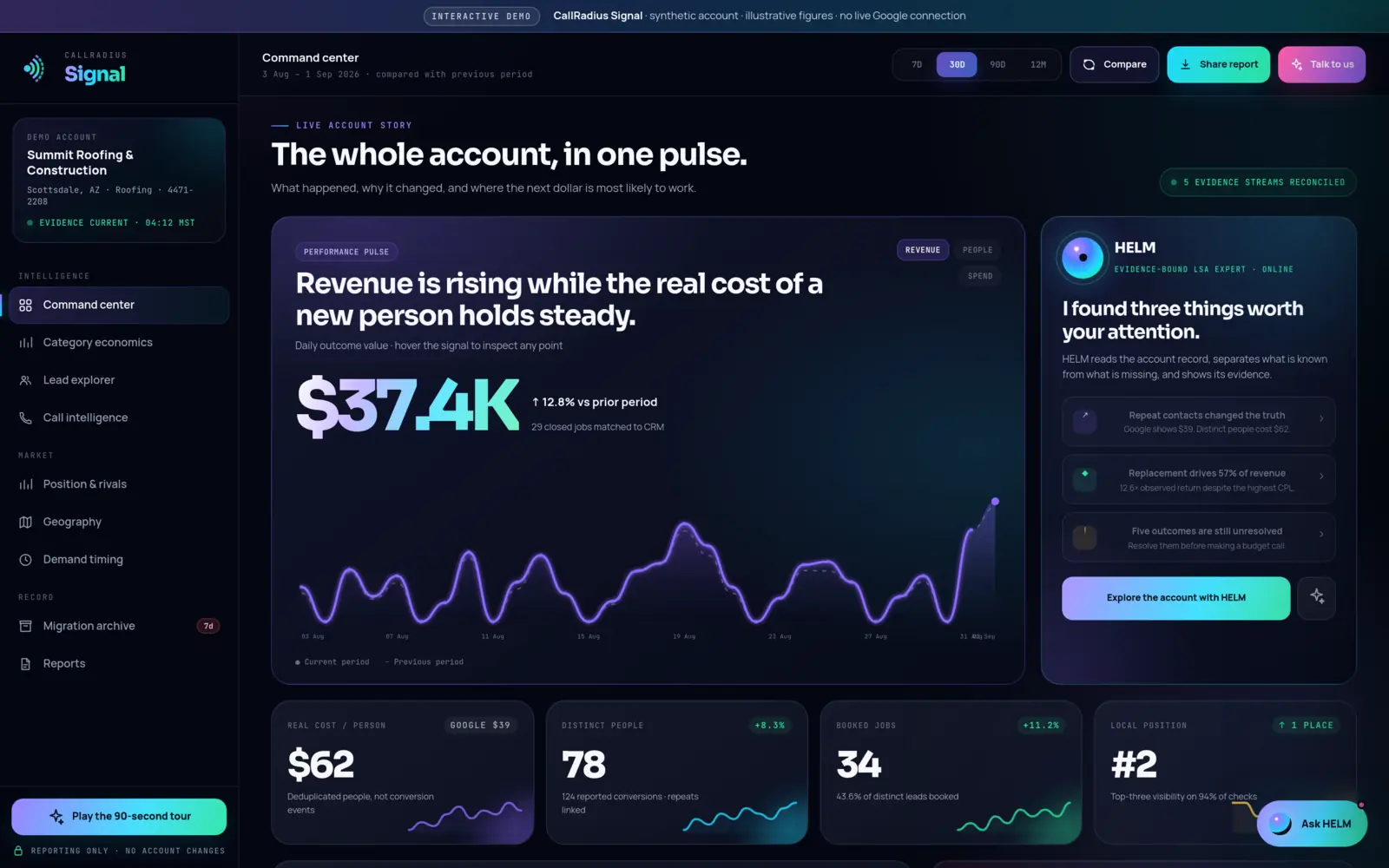
- In our fictional demo account, 124 reported conversions came from 78 people: $39 per event and $62 per person.
- You can measure this yourself with a lead export and a spreadsheet. CallRadius Signal does it automatically and keeps every repeat visible.
One customer, three leads
A homeowner notices water coming through her ceiling. At 7:40 in the morning she taps your Local Services ad and calls. You're on a roof, so it goes to voicemail. She tries again at 8:15. An hour later she sends a message through the ad as well. Your office calls her back, and she books an inspection.
That's one customer and one job. In a report that counts conversion events, it can also be three leads.
Nothing about this is a billing question. What you spent is what you spent. The question is what you divide it by, because the answer becomes the number you use to judge whether advertising is working.
How the gap shows up in the numbers
Here's what that looks like across a month in our public demo account, a fictional roofing company in Scottsdale.
The 46 extra events weren't fake or wasted. They were real people calling back, following up and changing channels, which is exactly what interested customers do. But counted as separate leads, they make a new customer look 37% cheaper than they really are. Put the other way round, the real cost per person is 59% higher than the reported figure.
Repeat contacts aren't a problem to delete. They're a fact to count correctly.
Why it matters for budget decisions
Most owners judge their ads by cost per lead. If that number is understated, every decision built on it inherits the error.
- Categories compare unfairly. Urgent work tends to bring repeat calls, because people in a hurry call again when nobody picks up. A category with lots of repeats can look cheap on cost per lead and expensive on cost per person.
- Budget moves the wrong way. If you shift money toward whatever looks cheapest per lead, you may be shifting it toward whatever generates the most repeat contacts, not the most customers.
- Response problems hide. A spike in repeat contacts often means calls aren't being answered quickly. Counted as extra leads, that shows up as good news.
That's why the useful comparisons are cost per distinct person and, better still, cost per booked job. In the demo account, the gap between $39 and $142 is the whole story of what a new piece of work actually costs.
Measure it yourself in a spreadsheet
You don't need software to check your own account. You need a lead export and about half an hour.
- Export your leads for one period. Include the date, lead type (call or message), the customer's contact details where available, the service category and whether the lead was charged.
- Clean the contact details. Strip formatting from phone numbers so "(480) 555-0100" and "4805550100" match. For message leads without a phone number, match on name and email.
- Pick a window and stick to it. Decide how far apart two contacts can be and still count as one person's inquiry; 30 days is a sensible start. A customer who returns six months later for new work is a new inquiry.
- Count distinct people. Use your spreadsheet's unique-count function on the cleaned contact column.
- Divide spend by distinct people. That's your real cost per person. Compare it with the cost per lead in your report.
- Mark booked jobs and divide again. Spend divided by booked jobs is the number that matters most.
What CallRadius Signal adds
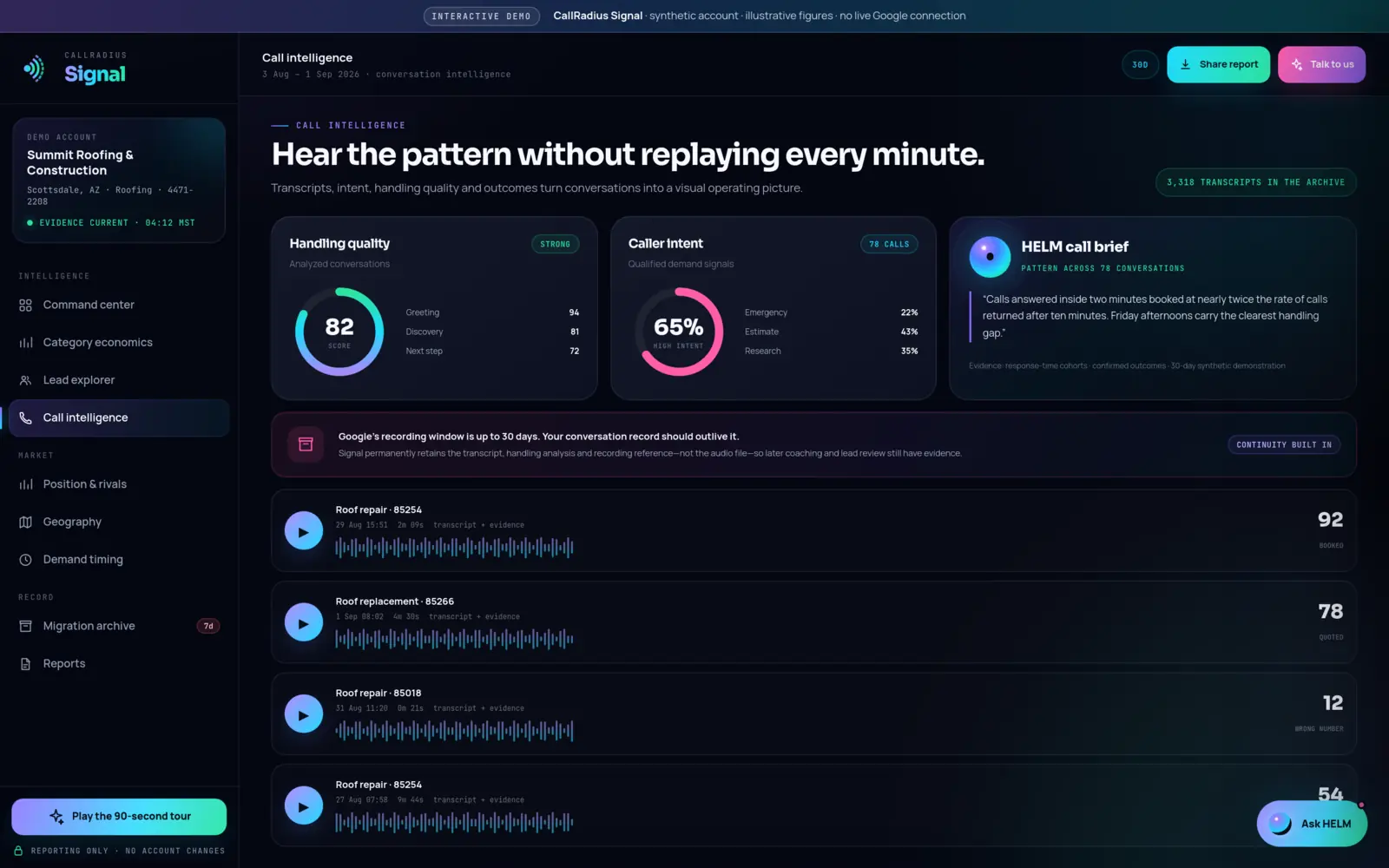
CallRadius Signal does this linking automatically and, importantly, doesn't discard anything. In the demo, 124 reported conversion events map to 78 distinct people, and every one of the 46 repeats stays inspectable in the lead explorer. You see both truths side by side: what Google reported and what actually happened.
It also connects people to outcomes. When a booked job hasn't yet been matched to revenue, HELM says so before answering any question that depends on return. In the demo account, five outcomes are still unresolved, and HELM flags them before it will discuss cutting or raising budget.
The takeaway
Before you change a budget, change the denominator. Count people, not events, and then count booked jobs. If the honest number still looks good, you can spend with confidence. If it doesn't, you've found the problem before it cost you another month.
See it for yourself in the CallRadius Signal live demo, or read Signal, explained for the full picture.
Questions about anything in this article? Talk to a person. We answer every message.