






Local intelligence, explained plainly.
What’s new across RadiusLocal.ai, how to measure Local Services Ads and AI answers without fooling yourself, and how to decide what kind of help you need. Written by the team that builds the platform.

We didn't copy the playbook. We rewrote it.
Six products, each built for one moment in how a customer finds and hires a local business. Here's why we built them that way, and what we actually did differently.

Introducing RadiusLocal.ai Social
Most owners know they should post every week and never find the hour. RadiusLocal.ai Social plans, writes and designs the week from your own facts. Here's why we built it and where it stands.

Introducing RadiusLocal.ai Meet
Booking pages, video meetings, AI notes and webinars in one place, built around the meetings where local businesses win work. Here's why we built it and what's live today.

The meeting is not the finish line
A good consultation can still go nowhere if nobody owns the next step. Here's a simple routine for before, during and after the meeting, and how to book the next step while the client is still there.

Reviews are read by machines now
Your Google reviews show up in Maps, in your Local Services Ads ranking and in the sources AI answers read. Here's how to earn more of them, and reply well, without breaking Google's rules.

Answer the phone: why responsiveness runs your Local Services Ads
With Local Services Ads, a missed call can cost you twice: once in the job you lose, and again in your ranking. Here is what Google says, and how to cover the phone without hiring a call center.

White-label done right: what your clients should see
White-label puts your name on the work, and on every claim in it. What clients should see, what they shouldn't, and how to use demo data in sales materials without misleading anyone.

Adding AI visibility to your agency as a measured service
Clients are starting to ask whether ChatGPT recommends them. Here's how to add AI visibility as a service with a baseline, defined deliverables and honest reporting, instead of a vague promise.

Several locations? Measure each market on its own
A single account-wide average can hide a strong market and a struggling one at the same time. How to measure each location or service area on its own, without reading too much into small numbers.

Planning for busy season across Local Services Ads and AI answers
Busy season is decided weeks before it starts. A practical plan for both channels: capacity first, then calls, reviews, seasonal pages, a budget built on your own history, and the numbers to check afterward.

Your business facts are infrastructure now
Your hours, services and credentials are no longer just website copy. Ads, maps, directories and AI answers all read them. Here's how to build one source of truth and keep every copy consistent.

Twelve questions to ask any local marketing provider, including us
How do they count a lead? What can they change without asking? What happens to your history if you leave? Twelve questions worth asking any provider, with our own answers alongside.

Share of voice depends on who you compare against
The same AI answers can give you 14%, 20% or 29% share of voice, depending only on which competitors you count. A worked example, and how to choose a comparison set you can live with.
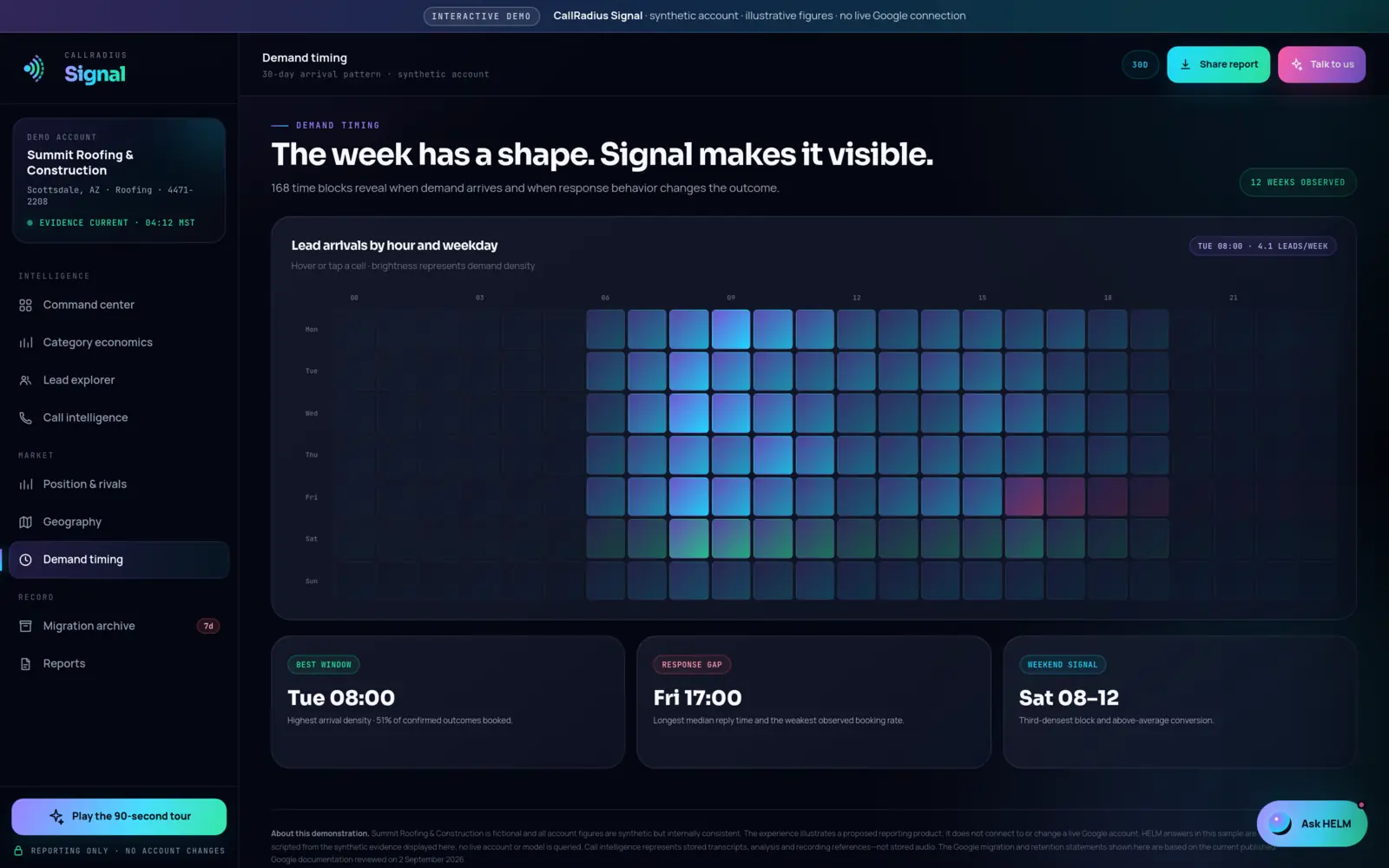
Demand has a shape: reading leads by hour and weekday
Leads don't arrive evenly. They cluster by hour and weekday, and the hours when nobody answers quickly can cost more than any ad setting. How to read the shape of your week, and when it's solid enough to act on.

From lead to booked job to revenue: closing the loop
Leads are a cost. Jobs are revenue. The link between them is the number most owners never measure. How matching works, why the unmatched gap should stay visible, and how to record job values without new software.

Did that change work? Judging before and after without fooling yourself
You changed something and the numbers moved. Before you credit the change, run through seven checks that separate a real effect from timing, chance and everything else that happened that month.
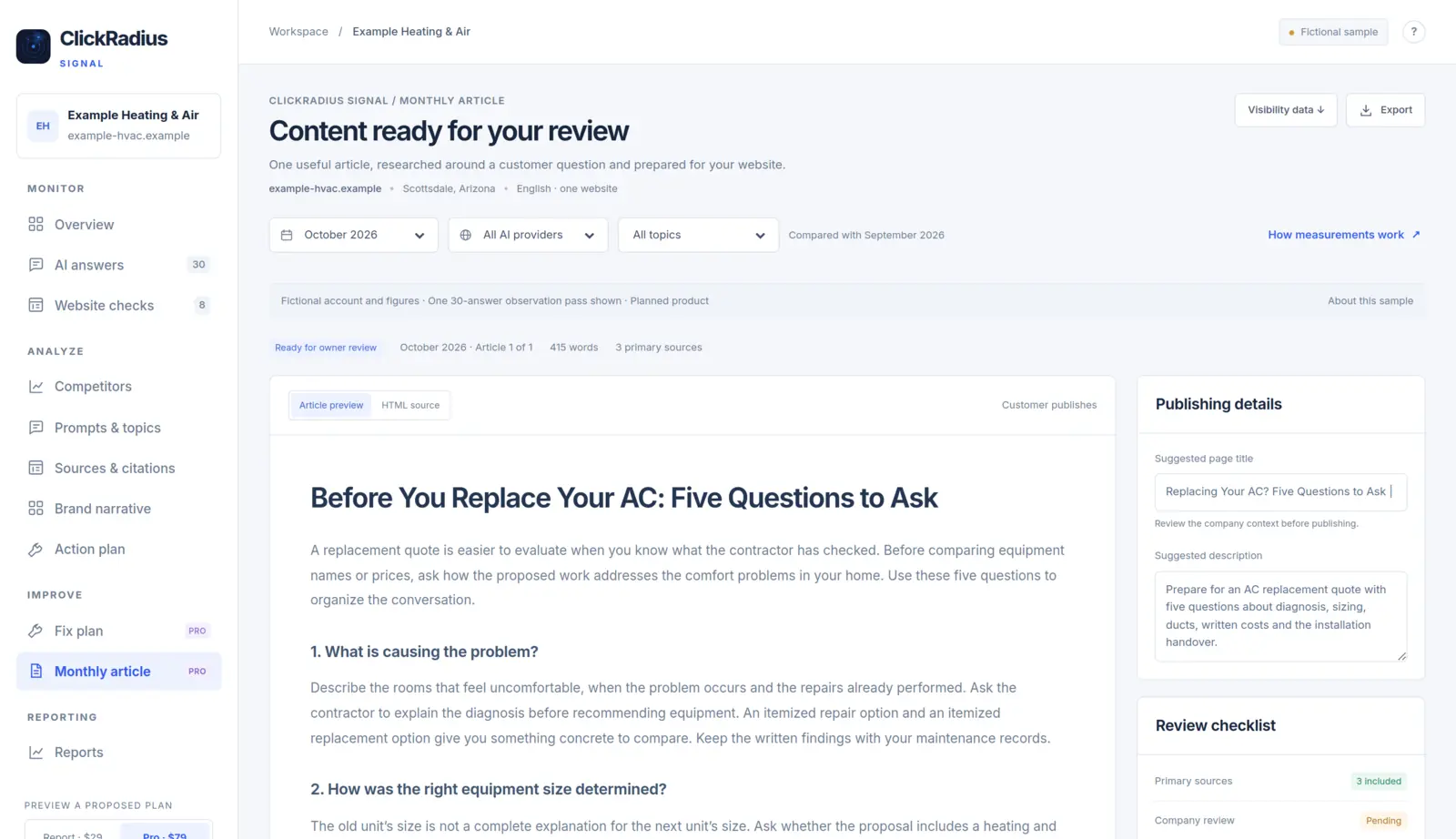
A guided tour of the ClickRadius Signal demo
ClickRadius Signal is planned for 2027, and its sample workspace already shows how it's designed to work. Here's where to start, what each screen answers and the details worth noticing.
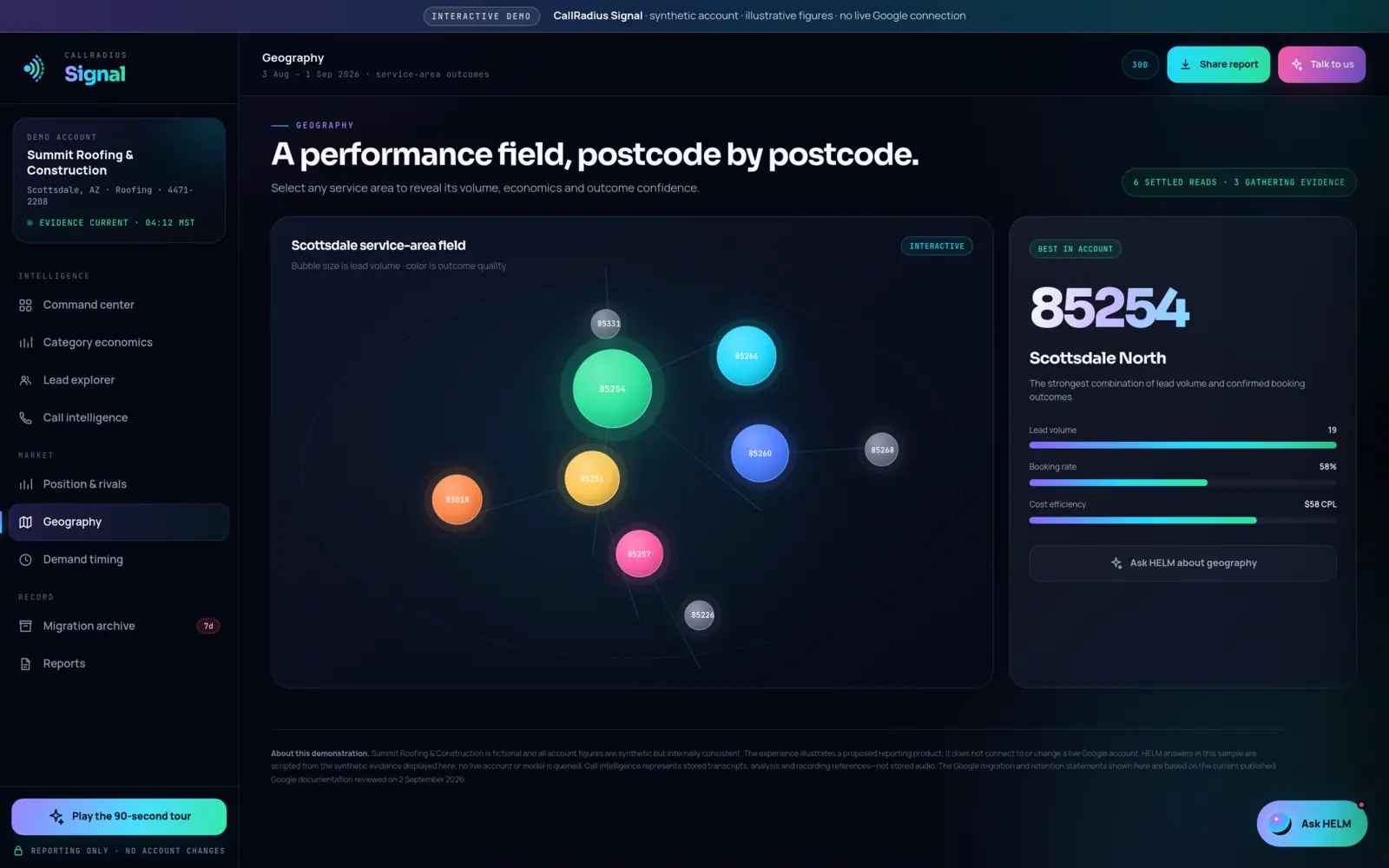
A guided tour of the CallRadius Signal demo
The CallRadius Signal demo has nine screens. Here's the order we'd open them in, the question each one answers, and the detail worth noticing on each.
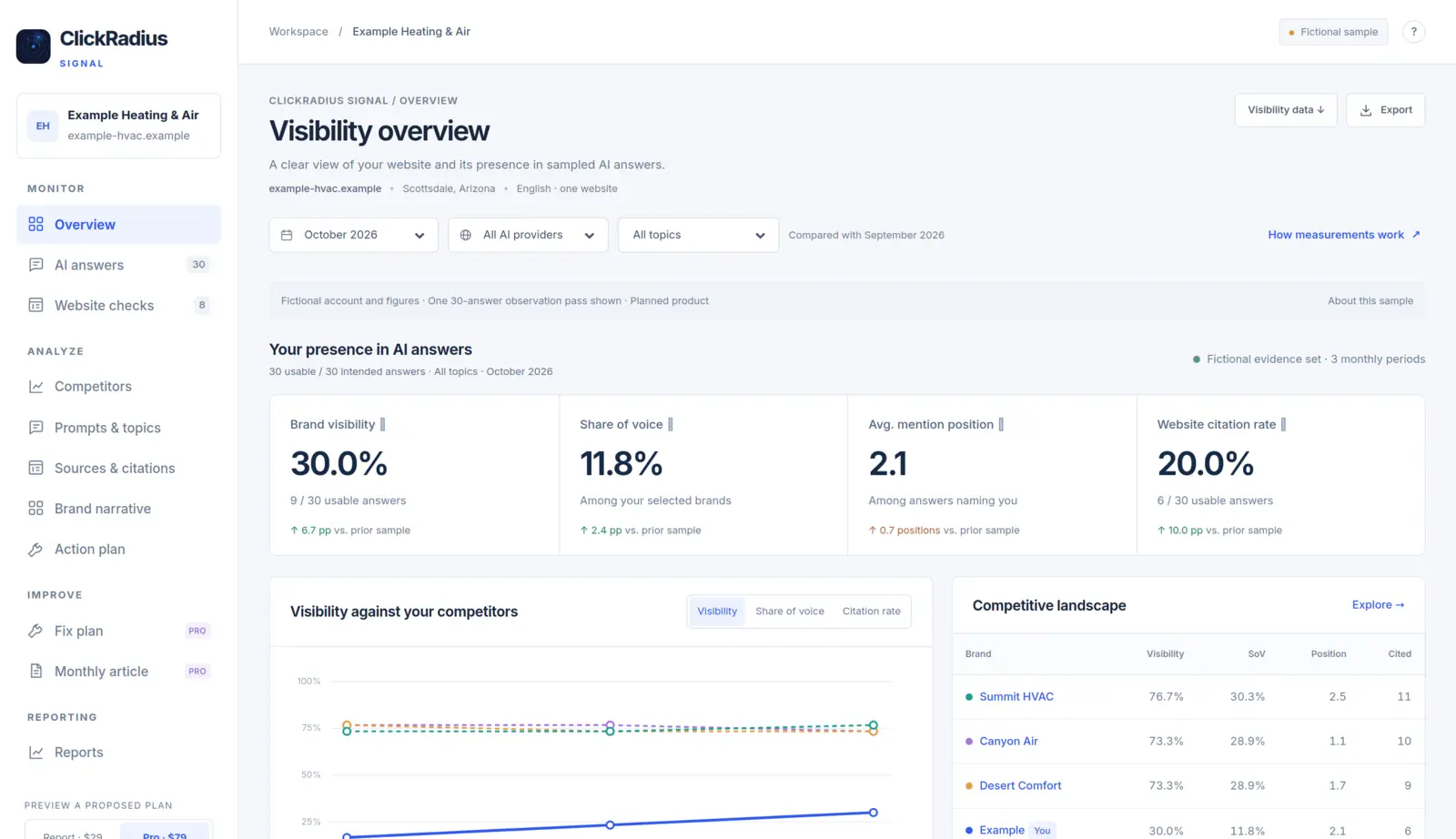
Signal, explained: one idea behind two products
CallRadius Signal and ClickRadius Signal give owners who run their own marketing the same evidence our managed teams use, as a read-only view. Here's what each one shows, what neither one does, and who they're for.
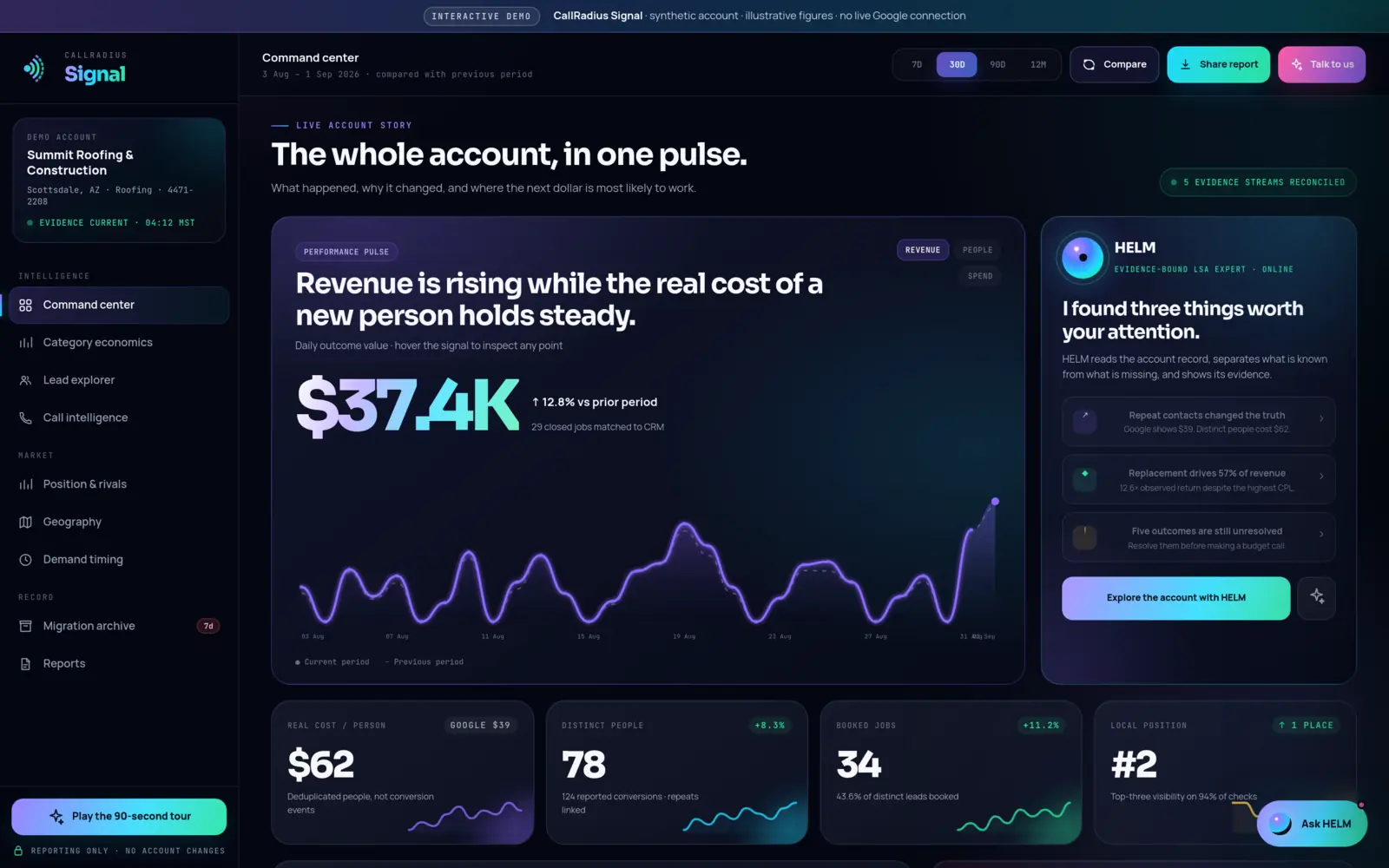
Google says $39. The real number is $62.
When one customer calls twice and then sends a message, a report built on conversion events can count three leads. Here's how that makes cost per lead look better than it is, and how to measure the real number yourself.
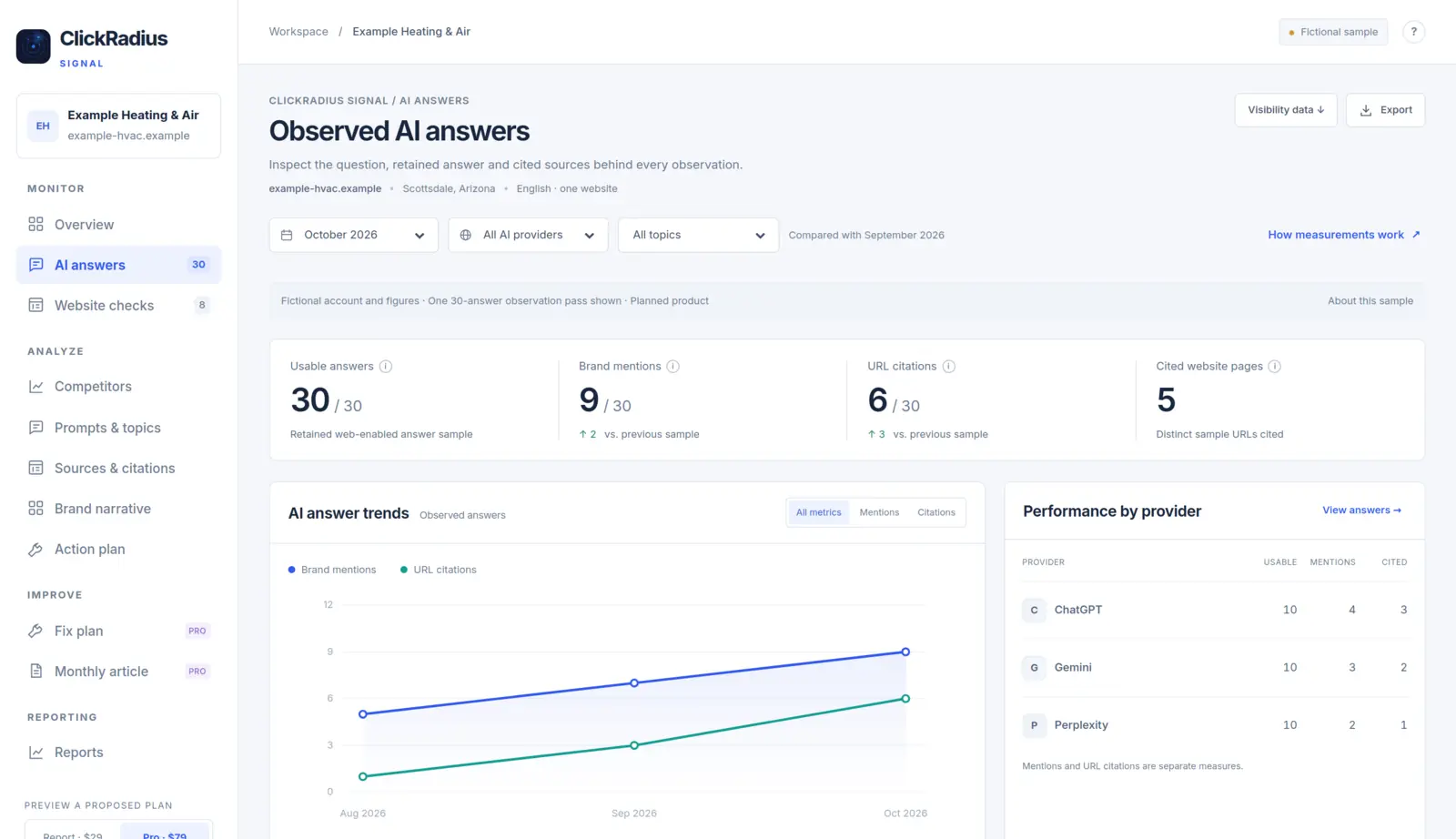
Mentioned, cited or missing: how to read an AI answer about your business
An AI answer can name your business, link to your website, do both or do neither. Here's why those are different results, and how to count them so the numbers mean something.
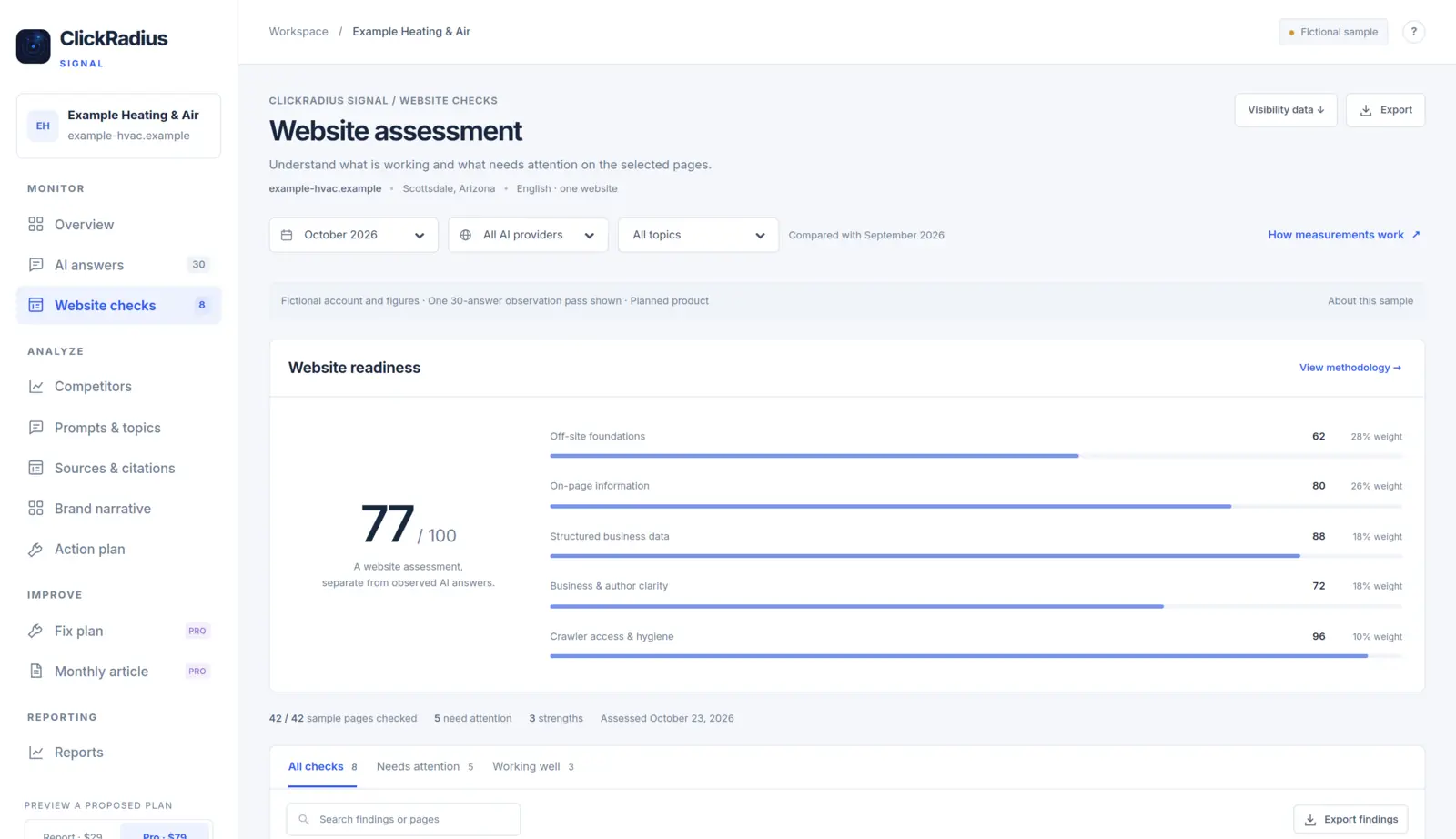
Website readiness isn't AI visibility, and why we report them separately
A readiness score tells you whether your website is easy for AI to understand and cite. Visibility tells you whether AI actually does. Treating one as the other leads to bad decisions.

The 20-minute AI self-audit for local businesses
Ten buying questions, three AI assistants and one simple sheet. A hands-on method for finding out what AI says about your business, and what to fix first.

Managed or self-serve? An honest guide to choosing
Four products, two kinds of help. Four questions to ask yourself, a side-by-side comparison, and the cases where the honest answer is neither yet.

Two front doors: planning for Local Services Ads and AI answers together
Customers find local businesses at the top of Google and, increasingly, by asking an AI assistant. The two work very differently, but the same few assets feed both.

How we label numbers: our evidence standard
Every number we publish is measured, illustrative or proposed, and we say which. Here's the standard we hold ourselves to, written down so you can hold us to it.
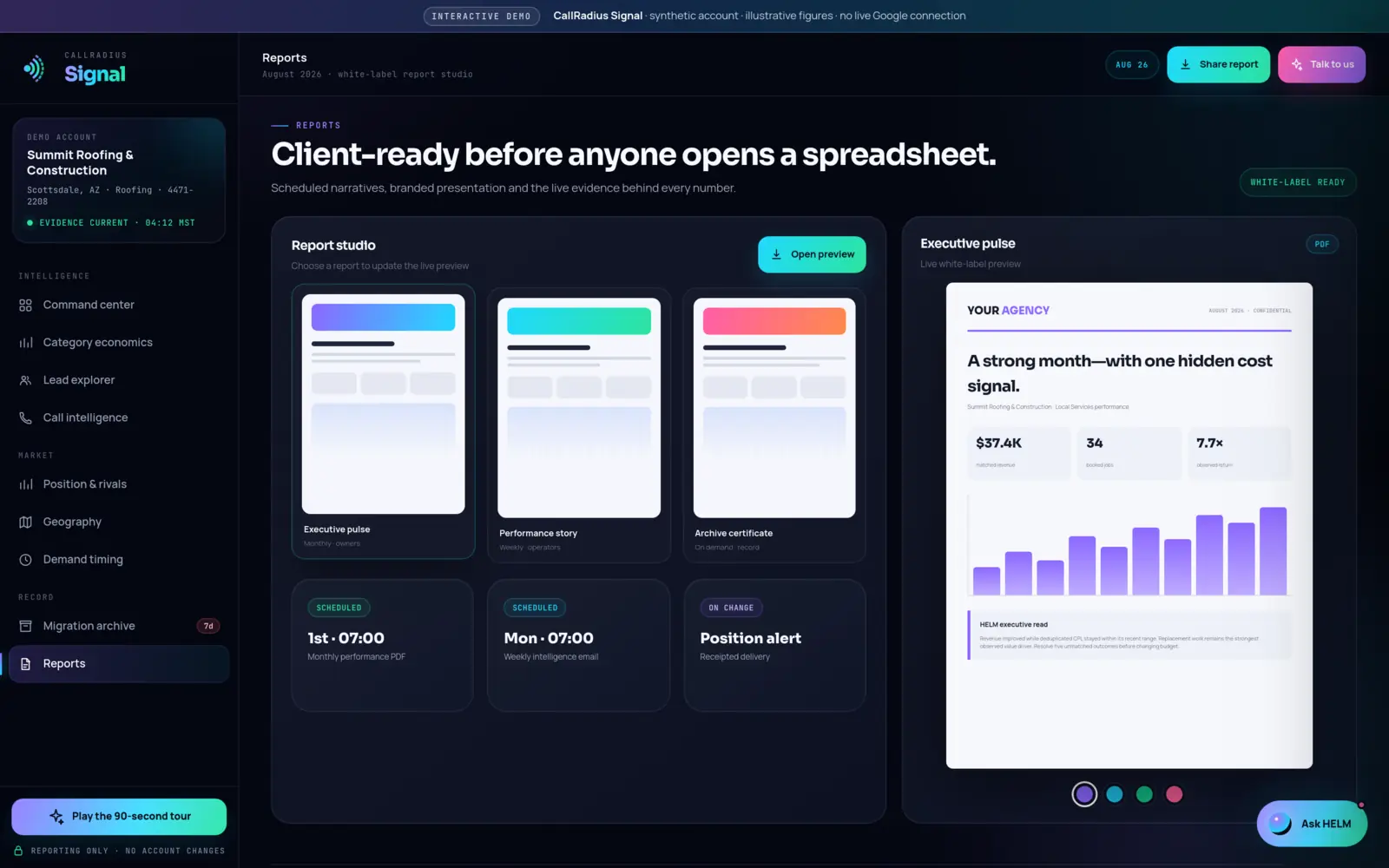
Client reports that get read: a one-page standard for agencies
Most monthly reports are skimmed for one number and filed. Here's a one-page standard for Local Services and AI search reporting that clients actually read, and that holds up when they ask questions.
Product screens in these articles come from our public demos and show fictional businesses with synthetic figures.
Put your own numbers next to these ideas.
Run the free Google LSA Score or the AI Readiness Score and see where your business stands today.