






Measurement
Counting leads, answers and outcomes honestly, with the denominators out loud. 6 articles.

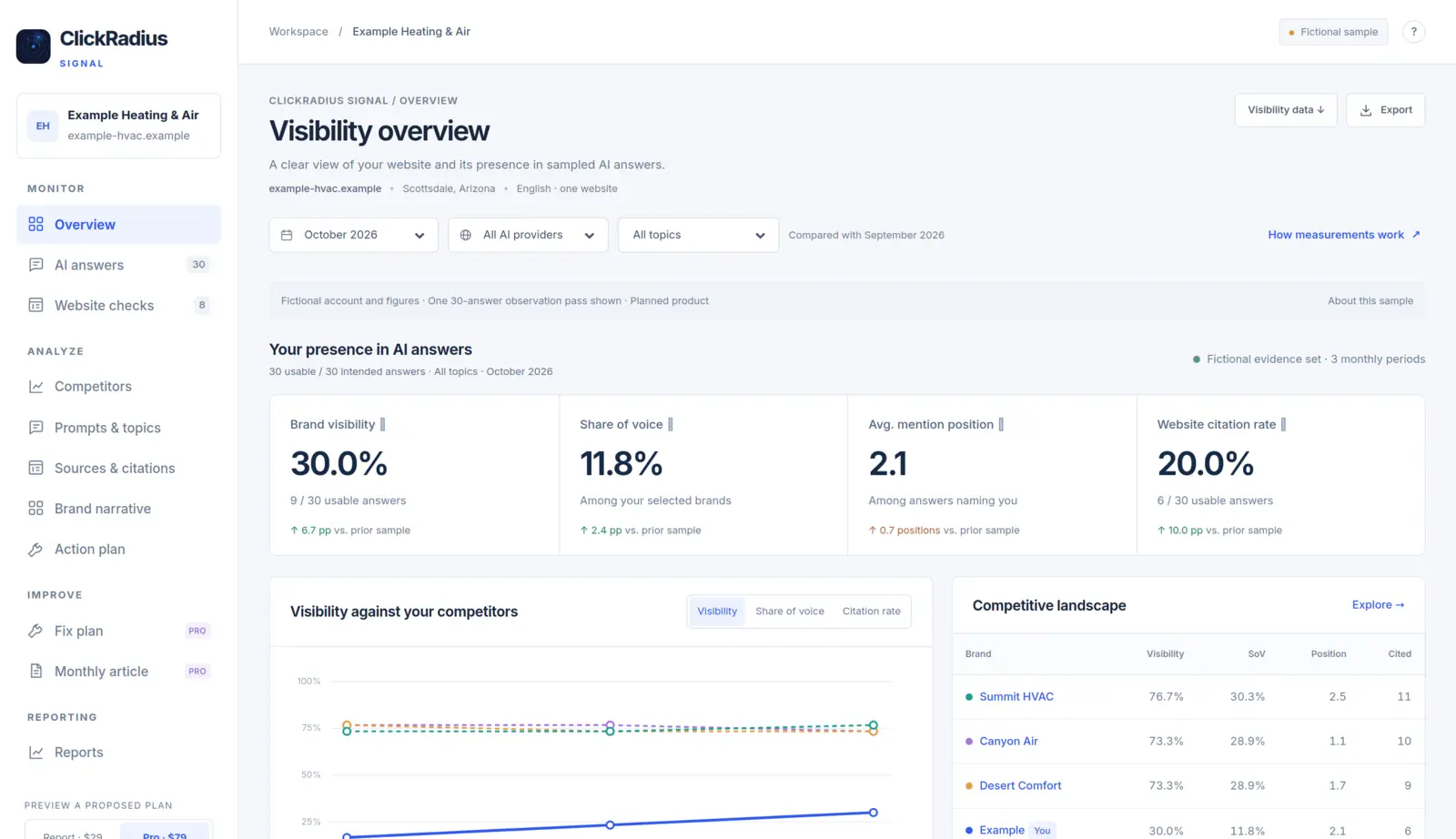
Share of voice depends on who you compare against
The same AI answers can give you 14%, 20% or 29% share of voice, depending only on which competitors you count. A worked example, and how to choose a comparison set you can live with.
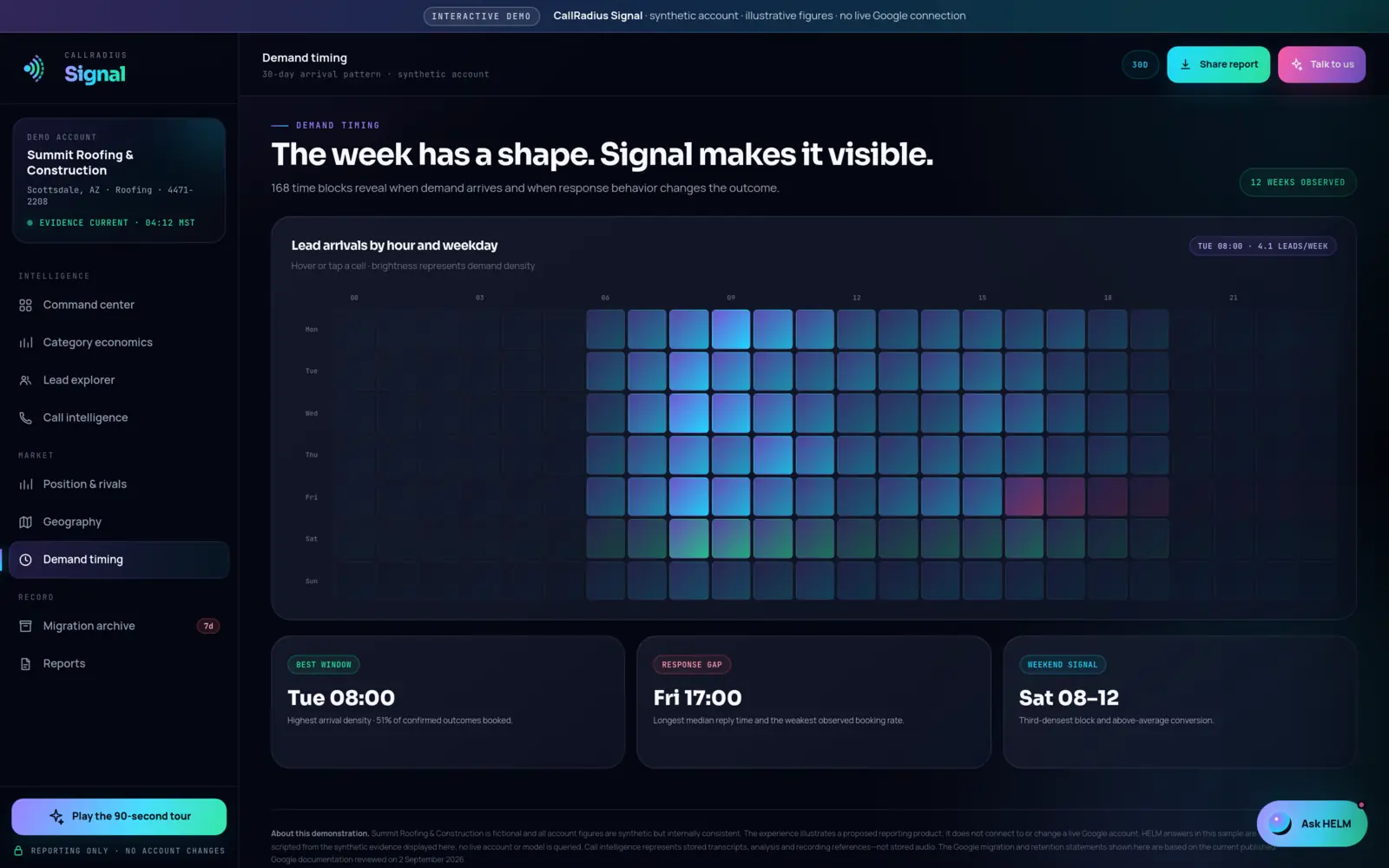
Demand has a shape: reading leads by hour and weekday
Leads don't arrive evenly. They cluster by hour and weekday, and the hours when nobody answers quickly can cost more than any ad setting. How to read the shape of your week, and when it's solid enough to act on.

From lead to booked job to revenue: closing the loop
Leads are a cost. Jobs are revenue. The link between them is the number most owners never measure. How matching works, why the unmatched gap should stay visible, and how to record job values without new software.

Did that change work? Judging before and after without fooling yourself
You changed something and the numbers moved. Before you credit the change, run through seven checks that separate a real effect from timing, chance and everything else that happened that month.
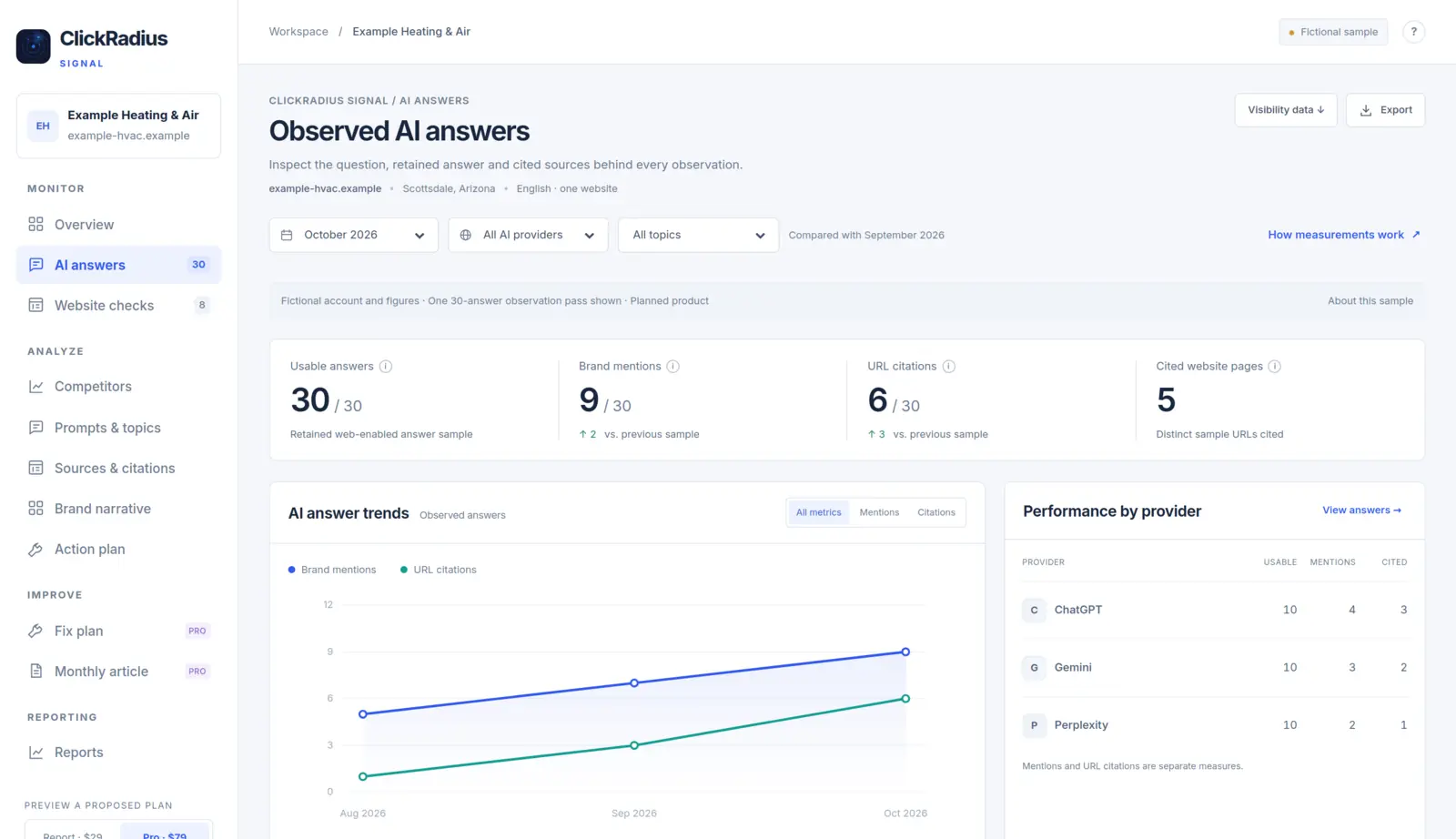
Mentioned, cited or missing: how to read an AI answer about your business
An AI answer can name your business, link to your website, do both or do neither. Here's why those are different results, and how to count them so the numbers mean something.
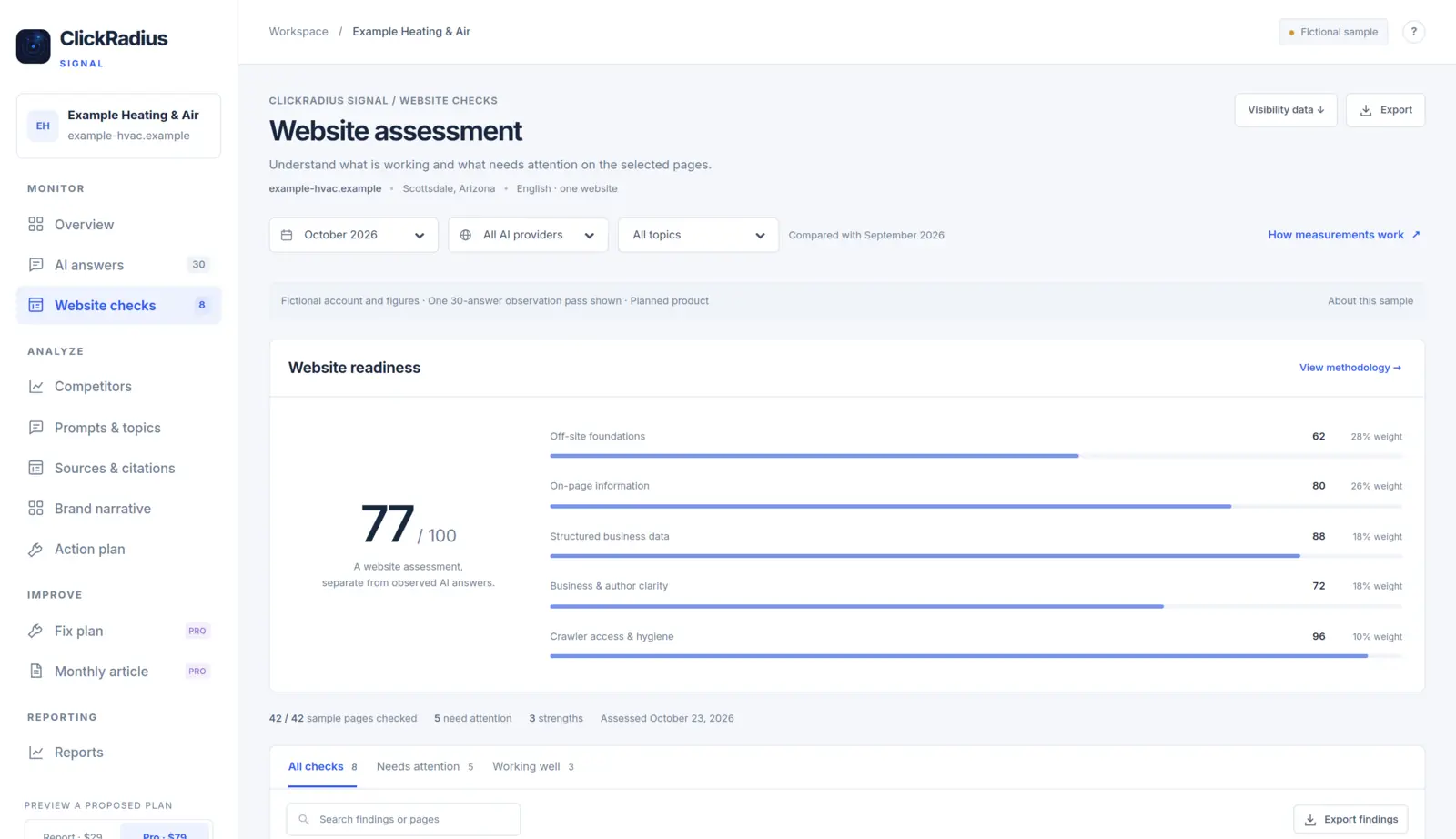
Website readiness isn't AI visibility, and why we report them separately
A readiness score tells you whether your website is easy for AI to understand and cite. Visibility tells you whether AI actually does. Treating one as the other leads to bad decisions.