






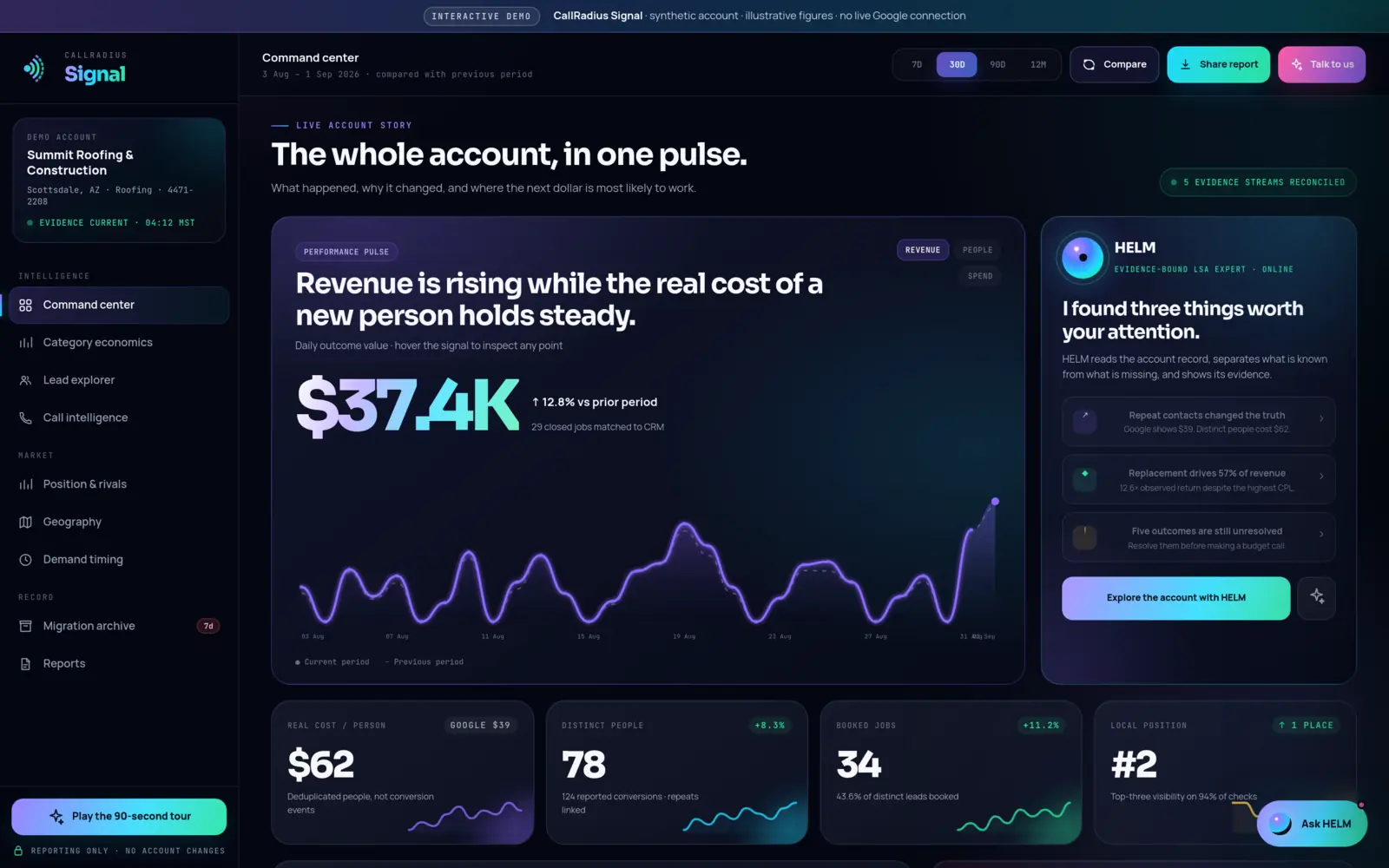
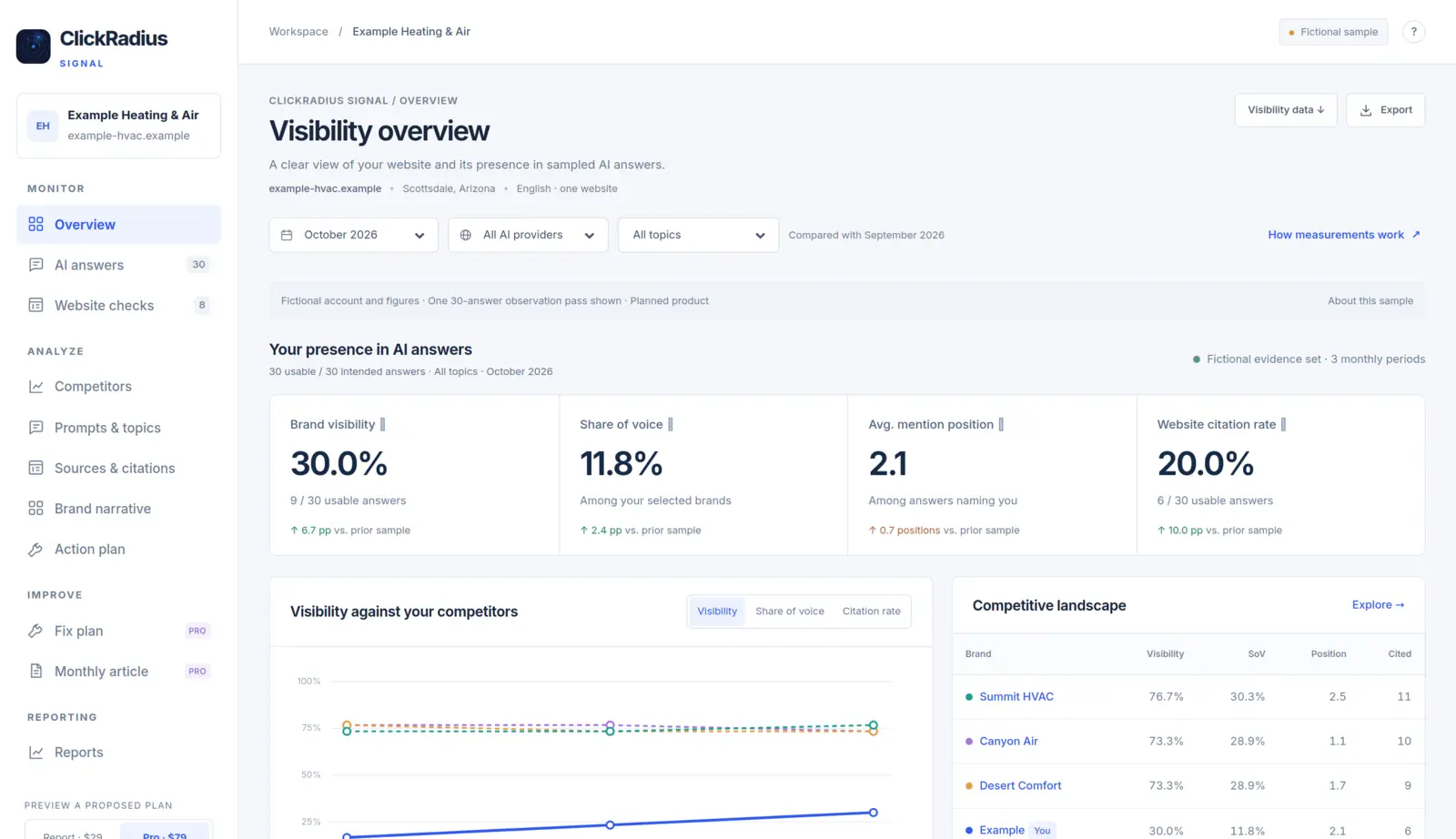


- Customers reach local businesses through two front doors: the top of Google, where Local Services Ads sit, and AI assistants.
- The channels work differently. Local Services Ads are paid per lead; AI answers are earned.
- The same assets feed both: accurate business facts, reviews, clear service information and fast response.
- Measure each on its own terms, then look at the whole picture.
Why two front doors
For years, local marketing meant one thing: show up when someone searches Google. That's still true. Local Services Ads appear at the very top of results for eligible trades, with a Google Verified badge next to the business name.
But a second door has opened fast. In BrightLocal's 2026 consumer research, 45% of US consumers said they'd used AI tools to find local business recommendations in the past year, up from 6% the year before. Customers now ask ChatGPT, Gemini or Perplexity "who should I call?" and get a short list of names.
Most businesses watch the first door closely and the second barely at all.
How each door works
| Local Services Ads | AI answers | |
|---|---|---|
| How you pay | Per lead, not per click | Not paid; earned |
| What it rewards | Verification, reviews, responsiveness, proximity and hours | What trusted sources say about you, and how clearly your website explains what you do |
| How fast it moves | Leads can arrive soon after your ad goes live | Builds gradually as sources and pages improve |
| What you measure | Leads, cost per person, booked jobs | Mentions, citations, share of voice |
| Our managed service | CallRadius | ClickRadius |
What feeds both
The channels differ, but a handful of assets do double duty. Work on these first and both doors benefit.
- Reviews. They matter for Local Services Ads, and review sites are among the sources AI answers lean on. A steady stream of genuine reviews helps everywhere.
- Accurate, consistent facts. Your name, address, phone number, hours and services should match across your Google Business Profile, your website and the main directories in your trade. Inconsistency confuses ranking systems and AI alike.
- Clear service information. A specific page for each service and area you cover gives Google a better picture of you and gives AI something concrete to cite.
- Fast response. Responsiveness matters in Local Services Ads, and every customer an AI sends your way still has to reach someone. Answered calls win both.
The best local marketing asset is still a business that's easy to verify, easy to understand and easy to reach.
Where to start
If you're in a trade that's eligible for Local Services Ads and the phone is how you win work, Local Services Ads usually produce leads sooner. AI visibility tends to build more gradually, which is why it's worth starting before you need it. Neither is guaranteed, and anyone who promises you a position in either should make you cautious.
The quickest way to decide is to measure both. The free Google LSA Score reads your public Local Services position against your market, and the free AI Readiness Score scores your website for AI search. Start where the gap is bigger.
One set of numbers
The two channels don't share a currency. Local Services Ads have a cost per person and a cost per booked job. AI answers have no cost per lead, because nobody bills you for a mention. So don't force them into one metric. Instead:
- Judge Local Services Ads on cost per distinct person and per booked job.
- Judge AI visibility on mentions and citations against usable answers, compared with the same competitors each month.
- Connect your website analytics so visits that arrive from AI assistants can be counted, and ask new customers how they found you.
A simple quarterly plan
- Month one: measure. Run both free tools, do the AI self-audit, and calculate your real cost per person from a lead export.
- Month two: fix the shared foundations. Correct inconsistent facts, fill gaps in your Google Business Profile, ask recent customers for reviews and tighten call handling.
- Month three: invest where the gap is. Put effort, or budget, into the channel your measurements say needs it most. Then measure again with the same method.
If you'd like help with either door, or both, that's what RadiusLocal is for. Choose managed or self-serve for each channel separately. Here's how to decide.
Questions about anything in this article? Talk to a person. We answer every message.