








- Google lists 17 legal practice areas among the 114 business types eligible for Local Services Ads in the US.
- Measure ads by practice area: cost per distinct person and cost per qualified consultation, not cost per lead.
- In AI answers, check whether your firm is named for the questions clients ask, and whether the facts about your attorneys are right.
- Clear attorney and practice-area information, consistent facts and fast intake help in both channels.
- Advertising rules for lawyers vary. Follow your own professional rules for anything you publish.
How people look for a lawyer now
Someone who needs a lawyer is often under stress: an accident, an arrest, a divorce, a debt they cannot pay. They want a name they can trust and a person who will pick up. Two places increasingly supply that name.
The first is the top of Google. Google lists 17 legal practice areas among the 114 business types eligible for Local Services Ads in the US, and license-checked attorneys appear there with a Google Verified badge. Since October 2025, every approved business carries one unified Google Verified badge. The second is an AI assistant. People now start researching a lawyer by asking ChatGPT, Gemini or Perplexity who to trust, and the answer is a short list of names.
What prospective clients ask
Write down the questions people ask before they know your firm's name, one set for each practice area you want to grow. A few examples:
- Choosing: "What should I look for in a personal injury lawyer in Phoenix?"
- Urgent: "I was arrested for DUI last night. Who should I call?"
- Process: "How does an uncontested divorce work in my state?"
- Cost: "How do estate planning lawyers usually charge?"
- Fit: "Is there an immigration lawyer near me who speaks Spanish?"
Keep your firm's name out of all but one question. You are testing whether AI finds you, not whether it recognizes you when prompted.
What to measure in Local Services Ads
For a firm, a lead is not a client. The useful numbers sit further down the line, and they differ by practice area.
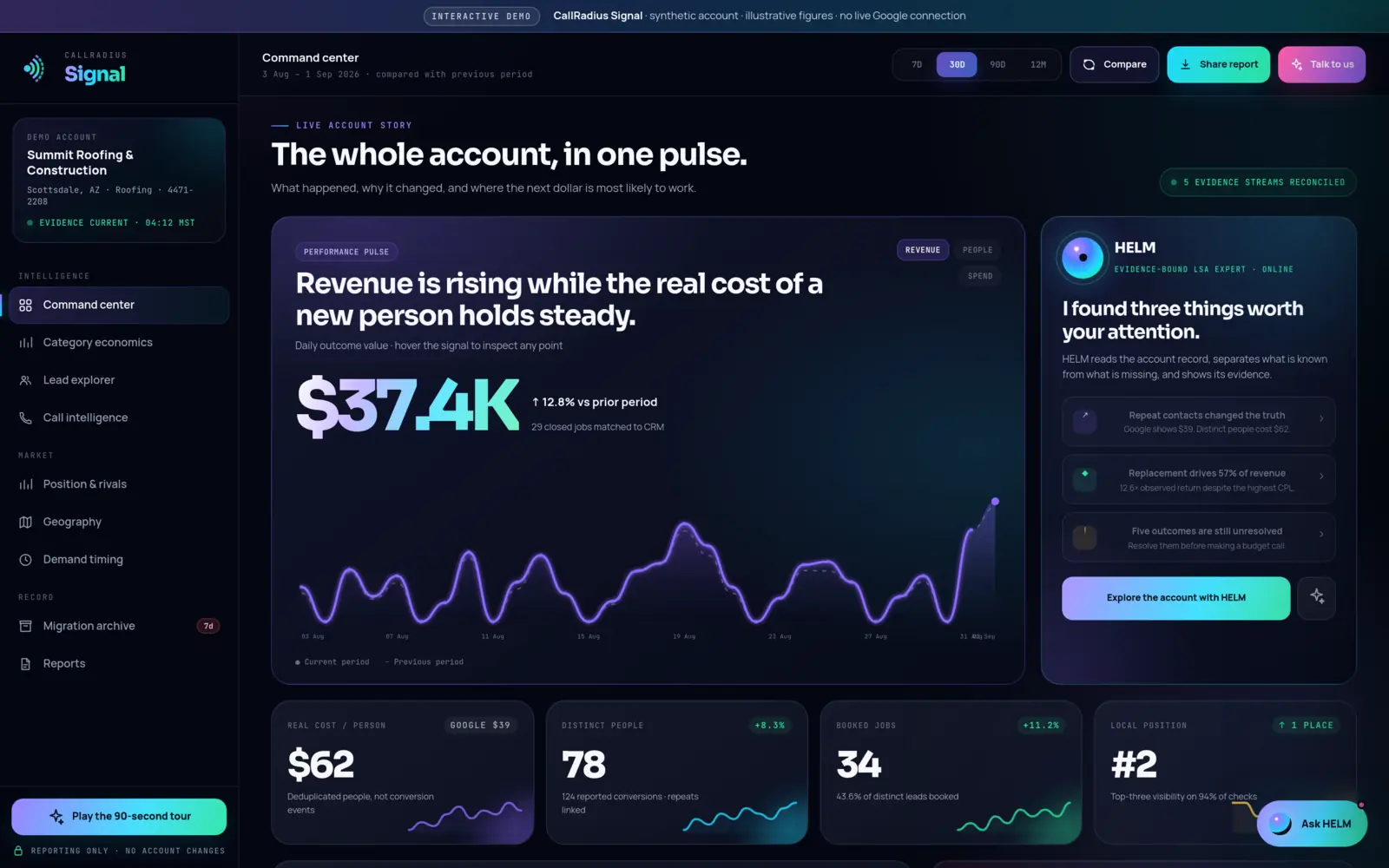
- Cost per distinct person. People in a hurry call again and send messages. Linking repeat contacts to one person gives you the real cost of a new inquiry. The method is in Google says $39. The real number is $62.
- Cost per qualified consultation, by practice area. Decide what counts as your firm's equivalent of a booked job, such as a consultation held or a matter opened, and measure every practice area against it the same way.
- Mismatched inquiries. Track calls for practice areas you do not handle, or from outside your area, separately. A pattern there is worth acting on.
- Intake response. How quickly calls are answered and returned, and what happens on the call. A missed call at 9 p.m. may be a client who signed with someone else by morning.
- Timing. Look at when inquiries arrive, including nights and weekends, and whether anyone is there to take them.
For more on breaking results down by service, see Category economics, explained.
What to measure in AI answers
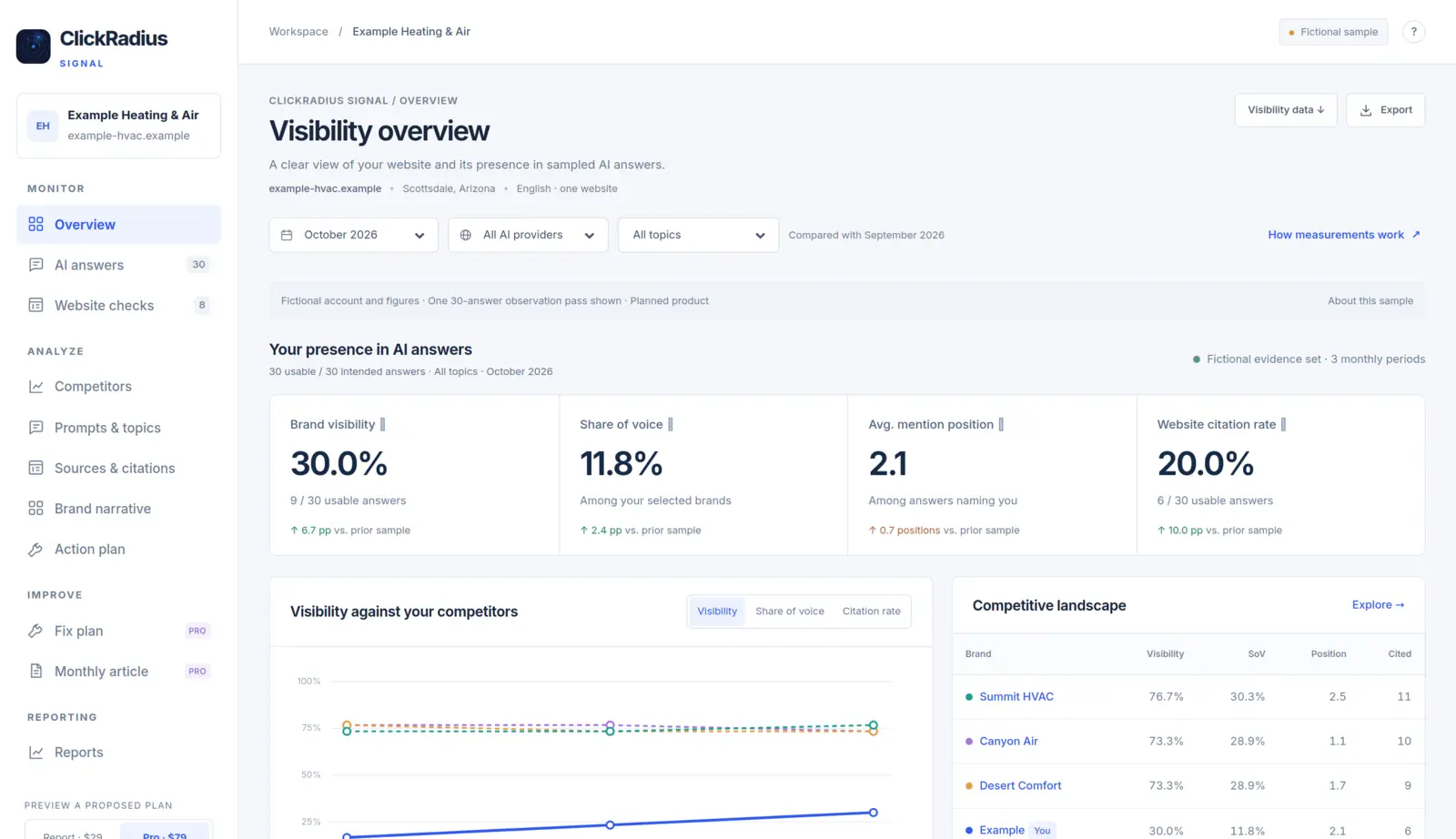
Ask your buying questions in ChatGPT, Gemini and Perplexity the same way each month and record whether your firm is mentioned, whether your website is cited, which other firms appear and which sources the answers rely on. Leave unavailable answers out of the count. The 20-minute AI self-audit has the full method.
Then ask each assistant directly what it knows about your firm, and check every fact:
- Are your attorneys' names and practice areas right?
- Are your office locations, hours and languages correct?
- Does the answer describe results, credentials or specialties you would not claim yourself? If so, correct the source it seems to rely on rather than arguing with the assistant.
What feeds both channels
- Clear attorney information. A page for each attorney with their name, practice areas and background, stated accurately. AI assistants need to know who the people are, not just the firm name.
- A page for each practice area. Plain-language explanations of what you handle, where, and what a first conversation looks like give both Google and AI assistants something concrete to work with.
- Consistent facts. Firm name, phone number, offices, hours and practice areas should match on your Google Business Profile, your website and the directories in your field.
- Reviews, handled within your rules. Reviews matter for Local Services Ads and appear among the sources AI answers lean on. How you ask for them and respond to them should follow your professional rules.
- Fast intake. Whatever door a client comes through, someone has to answer.
Common traps
| Trap | Why it hurts | What to do instead |
|---|---|---|
| Judging all practice areas by one blended cost per lead | Practice areas can differ in inquiry quality and value, and an average hides it | Measure each practice area separately, down to consultations |
| No one answering after hours | Urgent callers move on to the next name | Check when inquiries arrive and cover those hours |
| A single page listing every practice area | Gives AI little to cite for a specific question | Give each practice area its own page |
| Ignoring wrong facts in AI answers | Outdated attorney or office details keep repeating | Fix them at the source: your profile, site and directories |
| Publishing claims without checking your rules | Creates professional risk on top of marketing risk | Review content against your own rules before it goes live |
Which product fits
| Your situation | Fits |
|---|---|
| You want Local Services budgets and lead quality managed across your practice areas | CallRadius, $499 per LSA a month, not charged until your ad is live |
| Your firm runs its own Local Services Ads and wants clearer evidence | CallRadius Signal, $29 a month or Pro $79 (enrollment opening soon) |
| Your website needs attorney schema, entity work and citable answers, and nobody in-house can do it | ClickRadius |
| Your web team will make changes and publish content themselves | ClickRadius Signal, planned for 2027 at proposed prices |
On the proposed ClickRadius Signal Pro plan, the monthly article is prepared for the owner's review and your firm publishes it, which leaves room to check it against your rules first. See Managed or self-serve? for help choosing, or talk to a person.
Common questions
Which practice areas are eligible for Local Services Ads?
Google lists 17 legal practice areas in the US, including personal injury, family, criminal defense, DUI, estate, immigration and bankruptcy. Availability varies by region. The Industries page links to the full list.
What should count as a booked job for a law firm?
That is your firm's decision. Choose one definition, such as a consultation held or a matter opened, and apply it the same way every month and in every practice area.
Can you tell me what I am allowed to say in my ads?
No. Advertising rules for lawyers vary, and we do not give legal or ethics advice. Follow your own professional rules and the advice of whoever counsels your firm.
Will AI assistants recommend my firm if I do all this?
Nobody can promise that. AI answers depend on each provider. What you can do is make your firm easy to verify and understand, and measure whether that changes over time.
Questions about anything in this guide? Talk to a person. We answer every message.