








- Google lists 21 health and wellness professions among the 114 business types eligible for Local Services Ads in the US.
- Patients compare practices before they book, increasingly with AI. Being named, with accurate facts, matters.
- Measure ads by cost per distinct person and cost per booked appointment, by service.
- Hours, services, providers and new-patient details are facts patients ask about directly. Keep them right everywhere.
- Advertising and privacy rules for health professions vary. Follow your own professional rules.
How patients choose a practice
From dentists and orthodontists to chiropractors, physical therapists, optometrists and veterinarians, Google lists 21 health and wellness professions among the 114 business types eligible for Local Services Ads in the US. Patients compare providers before they book, and more of them now do part of that comparing by asking an AI assistant.
That means two front doors: the top of Google, where approved businesses carry the Google Verified badge (unified into one badge since October 2025), and the short list of names an AI assistant gives. Two front doors explains how they differ. This guide applies the idea to a practice.
What patients ask
Patient questions are often very practical. Write your own set, with your town or neighborhood in them:
- Availability: "Is there a dentist near me open on Saturdays?"
- Urgent: "Who can see me today for a broken tooth?" or "Is there an emergency vet open tonight?"
- Fit: "Which physical therapists near me work with runners after knee surgery?"
- Practical: "Which eye doctors near me are taking new patients?"
- Choosing: "What should I look for in a chiropractor?"
Notice how many of these turn on plain facts: hours, services, who is accepting new patients. If those facts are wrong or missing on the web, AI answers have nothing reliable to repeat.
What to measure in Local Services Ads
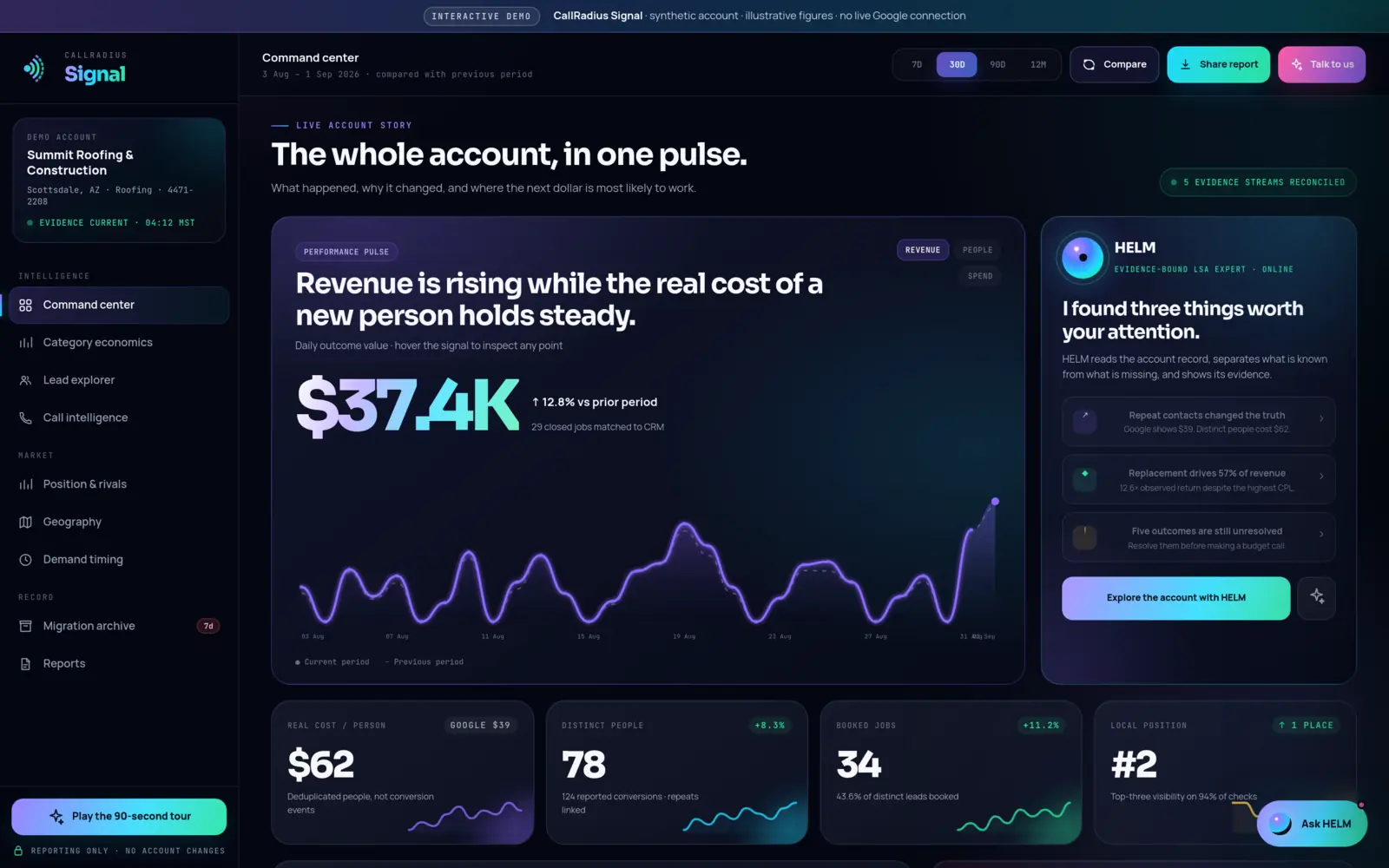
- Cost per distinct person. A patient may call, miss you, call again and send a message. That is one person, not three leads. The method is in Google says $39. The real number is $62.
- Cost per booked appointment, by service. A cleaning, an emergency visit and a new course of treatment behave differently. Measure each against the same definition of a booked appointment. Category economics, explained shows how.
- Front-desk response. How quickly calls are answered and what happens on them. Calls that ring out during a busy morning are patients who may book elsewhere.
- Timing. When requests arrive by hour and day, and whether your phones and schedule cover those times.
- Lead quality. Spam, wrong numbers and requests for services you do not offer should be tracked separately.
What to measure in AI answers
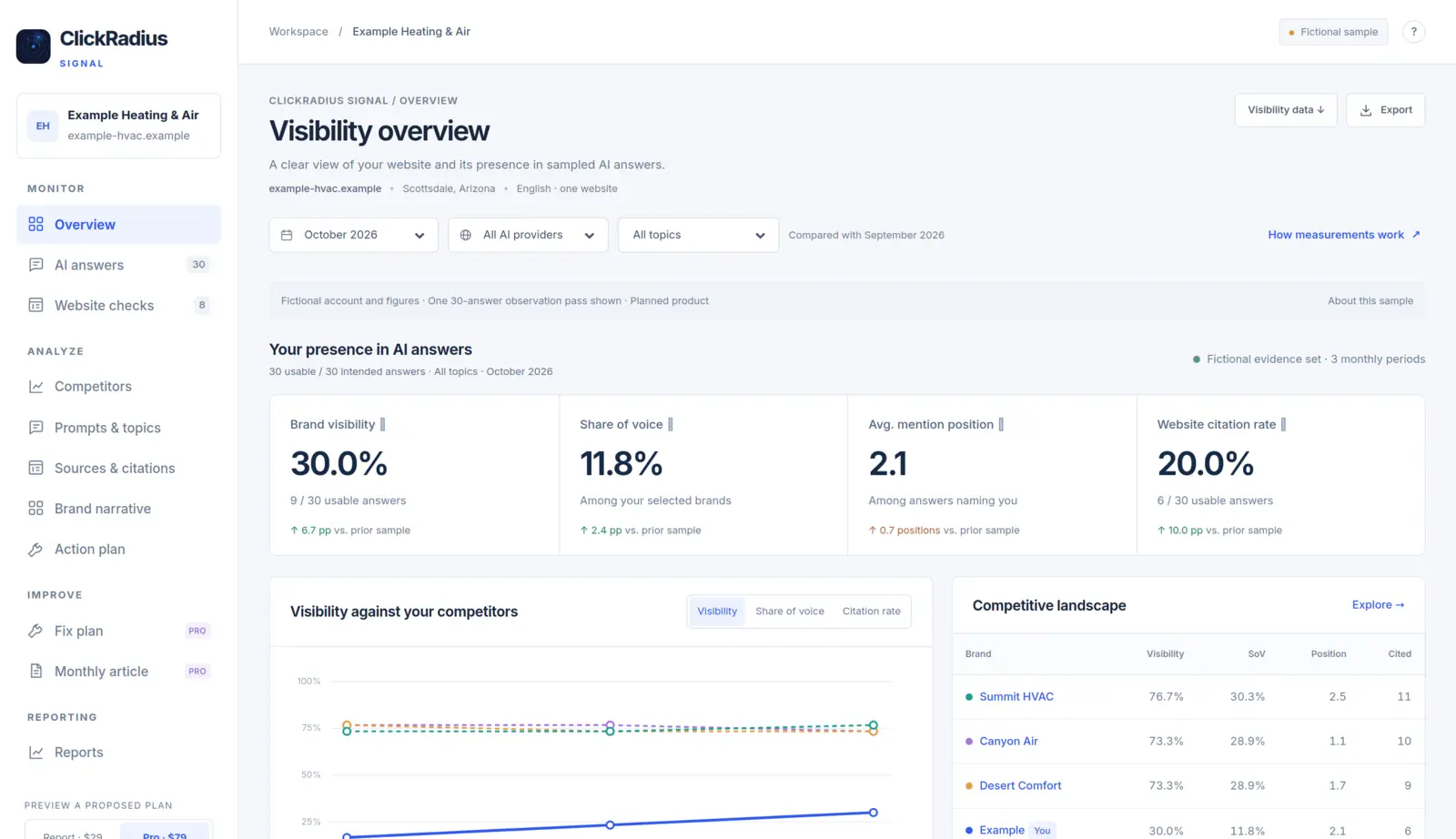
Ask your patient questions in ChatGPT, Gemini and Perplexity the same way each month. Record whether your practice is mentioned, whether your website is cited, which other practices appear and which sources the answers rely on. Leave unavailable answers out of the count rather than scoring them as misses. The 20-minute AI self-audit has the method.
Then ask each assistant what it knows about your practice and check every detail: your providers' names, services, hours, locations and whether you are taking new patients. Wrong information is worth fixing at its source, starting with your Google Business Profile and your own website.
What feeds both channels
- Accurate, consistent facts. Practice name, phone, hours, locations, services and providers should match on your Google Business Profile, your website and the directories in your field.
- A page for each service. Plain-language pages that explain what you offer and who it is for give Google and AI assistants something specific to work with.
- Clear provider information. A page for each provider with their name, role and background, stated accurately and in line with your professional rules.
- Reviews, handled within your rules. Reviews matter for Local Services Ads and appear among the sources AI answers lean on. How you request and respond to them should respect patient privacy and your professional obligations.
- An answered phone. Every patient who finds you still has to reach the front desk.
Common traps
| Trap | Why it hurts | What to do instead |
|---|---|---|
| Outdated hours or holiday closures online | Availability questions get wrong answers | Update your profile and website whenever hours change |
| Judging ads by cost per lead | Repeat calls make new patients look cheaper than they are | Count distinct people, then booked appointments |
| Phones unanswered at peak times | Patients book the next practice on the list | Check response by hour and day |
| One page for every service | Gives AI little to cite for a specific question | Give each main service its own page |
| Publishing patient stories without checking your rules | Creates privacy and professional risk | Review content against your own rules first |
Which product fits
| Your situation | Fits |
|---|---|
| You want Local Services Ads run for your eligible profession, with lead quality and calls watched | CallRadius, $499 per LSA a month, not charged until your ad is live |
| Your practice runs its own Local Services Ads and wants clearer evidence | CallRadius Signal, $29 a month or Pro $79 (enrollment opening soon) |
| Your website needs work for AI search and nobody in the practice can do it | ClickRadius, with dentist, chiropractor, veterinarian and medical-practice templates |
| Your web person will make changes and publish content themselves | ClickRadius Signal, planned for 2027 at proposed prices |
Choose by channel. Managed or self-serve? can help, and the free tools show where the bigger gap is.
Common questions
Is my profession eligible for Local Services Ads?
Google lists 21 health and wellness professions in the US, including dentists, chiropractors, physical therapists, optometrists and veterinarians. Availability varies by region, and some categories are limited to certain states or are in pilot. The Industries page links to the full list.
Can you tell me what my practice may say in ads or reviews?
No. Rules vary by profession and place, and we do not give legal or compliance advice. Follow your own professional rules and the advice of whoever counsels your practice.
Does CallRadius Signal keep call recordings?
Signal retains transcripts, handling analysis and recording references, not audio files. Call intelligence is part of Signal Pro. Enrollment is opening soon.
What should I fix first?
A good place to start is the facts patients ask about directly: hours, services, providers and new-patient availability. They are quick to correct and they matter in both channels.
Questions about anything in this guide? Talk to a person. We answer every message.