








- Home and property trades are the largest group on Google's list: 40 of the 114 business types eligible for Local Services Ads in the US.
- In Local Services Ads, judge results by cost per distinct person and cost per booked job, broken down by service.
- In AI answers, track mentions, citations and competitors for the same buying questions every month.
- Accurate facts, specific service pages, genuine reviews and answered calls help in both channels.
Why the phone decides everything
Roofers, HVAC companies, plumbers, electricians, garage door and pest control companies, remodelers and the other home and property trades make up 40 of the 114 business types Google lists as eligible for Local Services Ads in the US. For most of them, work arrives the same way: someone has a problem at home, picks up a phone and calls whoever looks trustworthy and available.
That customer now has two front doors. One is the top of Google, where Local Services Ads appear with a Google Verified badge. The other is an AI assistant such as ChatGPT, Gemini or Perplexity, which answers with a short list of names. We cover how the two differ in Two front doors. This guide is about applying that to a trade business.
What your customers ask
Start with the questions people ask before they know your name. They usually fall into a few kinds. Write your own versions, with your city or service area in them:
- Urgent: "My AC died and it's 110 out. Who can come today?" or "Who can stop a leaking pipe tonight?"
- Planned work: "Who replaces roofs after hail damage near me?" or "Who installs garage doors in my area?"
- Cost: "How much does a water heater replacement usually cost?"
- Repair or replace: "Should I repair or replace a 15-year-old furnace?"
- Trust: "Which electricians near me are licensed and insured?"
These questions are useful twice. They show which services you should be measuring in your ads, and they become the buying questions you test in AI answers.
What to measure in Local Services Ads
Local Services Ads charge per lead, so the arithmetic of a lead matters more than anything on the dashboard. Measure these, using the same method every month:
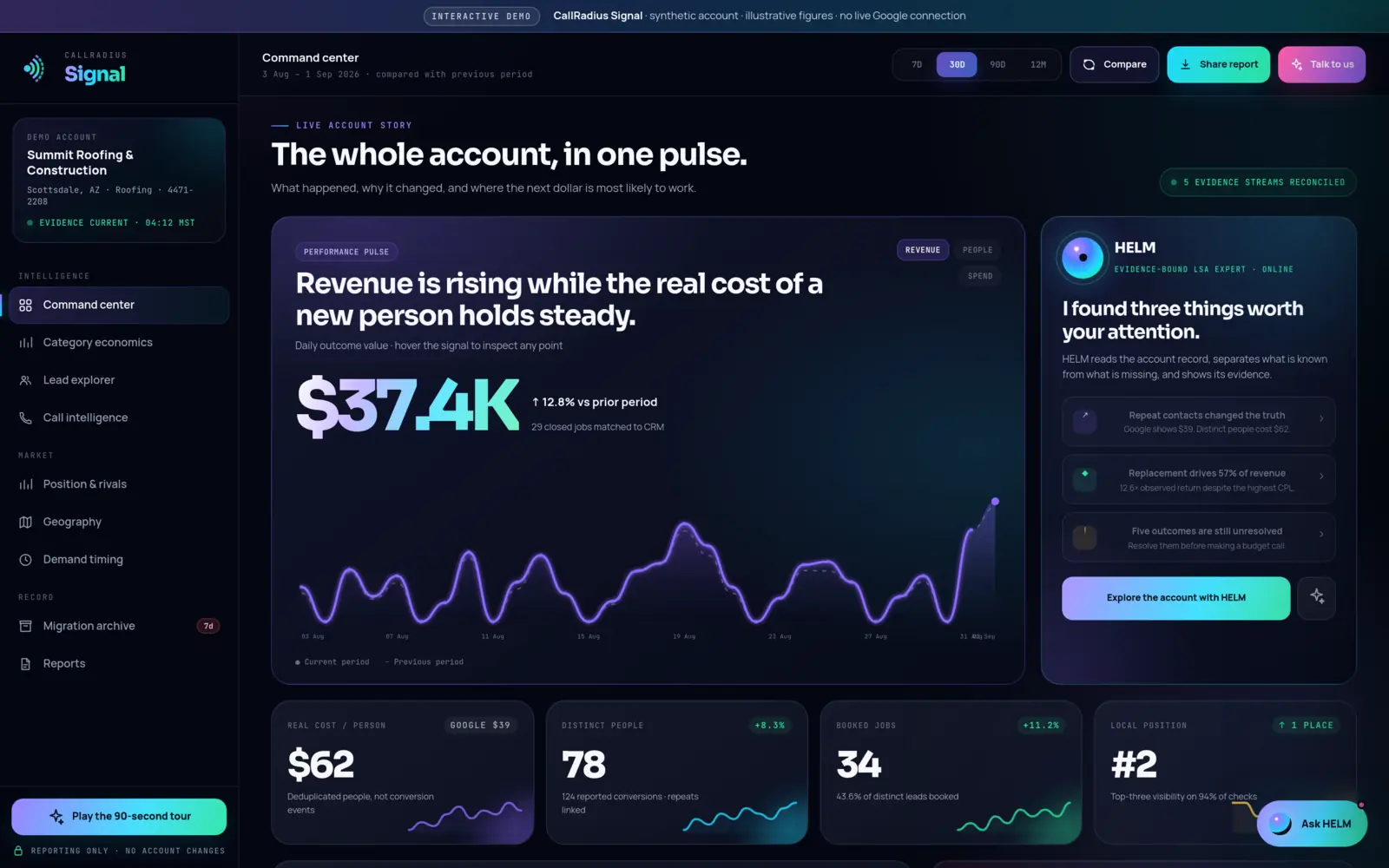
- Cost per distinct person. A worried homeowner may call twice and then send a message. Counted as conversion events, that is three leads. Counted honestly, it is one person. See Google says $39. The real number is $62.
- Cost per booked job, by service. Emergency repairs, installations and replacements behave differently. A blended average hides which service is paying for the rest. Category economics, explained walks through this.
- Response time and call handling. How fast calls are answered, and what happens on them, often explains why one month books better than another. A rise in repeat contacts can be a sign that calls are going unanswered.
- Where and when leads arrive. Compare service areas, hours and days of the week. A slow Friday afternoon reply can cost more jobs than any budget setting.
- Junk leads and credits. Spam, wrong numbers and out-of-area calls still cost money if nobody reviews them.
What to measure in AI answers
AI answers have no cost per lead, because nobody bills you for a mention. Measure presence instead. Take ten of your buying questions, ask them in ChatGPT, Gemini and Perplexity the same way each month, and record:
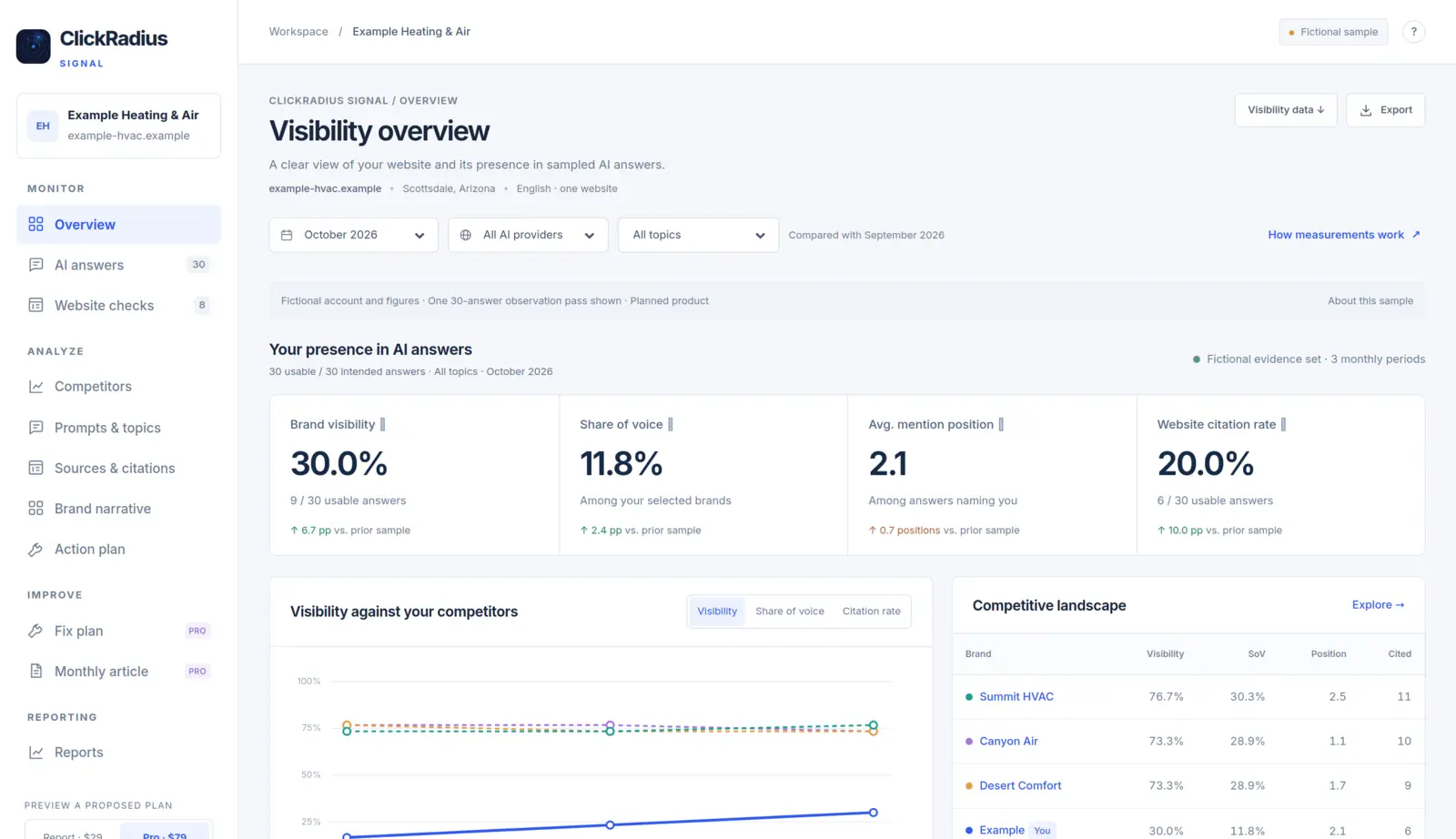
- Whether your business was mentioned, and whether your website was cited. These are different measures.
- Where you appeared in the order of names, and which competitors appeared instead.
- Which sources the answers relied on, such as directories, review sites and competitors' pages.
If an assistant gives no usable answer, leave it out of the count rather than scoring it as a miss. The full method is in The 20-minute AI self-audit.
What feeds both channels
- Consistent business facts. Your name, phone number, hours, service area and services should match on your Google Business Profile, your website and the main directories in your trade.
- A page for each service. One page that says "we do it all" gives AI little to cite. Separate pages for repair, installation and maintenance, written in plain language, give both Google and AI assistants something concrete.
- Genuine reviews, steadily. Google says star ratings and the number of reviews affect how a business ranks in Local Services Ads, and review sites are among the sources AI answers lean on.
- Claims you can support. If you say you are licensed, insured or available around the clock, make sure it is true and stated the same way everywhere.
- Answered calls. Every lead from either door still has to reach a person.
Common traps
| Trap | Why it hurts | What to do instead |
|---|---|---|
| Judging ads by cost per lead | Repeat contacts make a new customer look cheaper than they are | Count distinct people, then booked jobs |
| Cutting budget after one slow week | Trades are seasonal, and one week is a small sample | Compare with the same period before and look at several weeks |
| Letting calls go to voicemail at busy times | Slow replies lose jobs, and repeats look like extra leads | Check response time by hour and day |
| Testing AI with your own name in the question | It tells you whether AI recognizes you, not whether it finds you | Keep your name out of all but one question |
| Changing five things at once | You cannot tell which change mattered | Make a few changes, write down the dates, then measure |
Which product fits
| Your situation | Fits |
|---|---|
| You want Local Services Ads run for you, with budget, lead quality and calls watched around the clock | CallRadius, $499 per LSA a month, not charged until your ad is live |
| You run your own Local Services Ads and want clearer evidence | CallRadius Signal, $29 a month or Pro $79 (enrollment opening soon) |
| Your website needs real changes for AI search and nobody on your team can make them | ClickRadius, with industry templates for plumbers, HVAC and electricians |
| You or your developer will make website changes yourselves | ClickRadius Signal, planned for 2027 at proposed prices |
The products are independent, so choose by channel. Read Managed or self-serve? if you are unsure, or start with the free tools to see which channel has the bigger gap.
Common questions
Is my trade eligible for Local Services Ads?
Google lists 40 home and property trades among the 114 eligible business types in the US, but availability varies by region, and some categories are limited to certain states or are in pilot. The Industries page links to the full list.
How many buying questions should I track?
Ten is a manageable start: a mix of urgent, planned, cost, repair-or-replace and trust questions. Keep the same ten each month so the comparison means something.
Should I start with ads or AI visibility?
If your trade is eligible and the phone is how you win work, Local Services Ads usually produce leads sooner, while AI visibility builds gradually. Neither is guaranteed. Measure both with the free tools and start where the gap is bigger.
Do I need software to do any of this?
No. A lead export, a spreadsheet and the self-audit will get you started. Software helps when you want the same method applied every month without doing it by hand.
Questions about anything in this guide? Talk to a person. We answer every message.